

By Tajnuva Jabeen
Writer & Joint Convener,NCP
To commemorate the one-year anniversary of the July Uprising, the newly formed National Citizen Party (NCP) has launched its “July March for Nation-Building” program. Over the span of a month, the march will travel from Teknaf to Tetulia, across all 64 districts of Bangladesh. Since its formation, the NCP has faced all kinds of commentary and criticism. It has been labeled a TSC-centric group, accused of Dhaka-centric politics. Having been launched just before Ramadan, the party could not carry out much organizational activity during the holy month. That was followed by two Eids in quick succession. Despite all these realities, within just four months of its formation, the NCP has taken on the ambitious task of launching a countrywide march. In villages, neighborhoods, localities, markets, and towns, central and local NCP leaders are reaching out to people, engaging in conversations. People are embracing the children of the historic uprising with open arms.
The Overwhelming Public Response
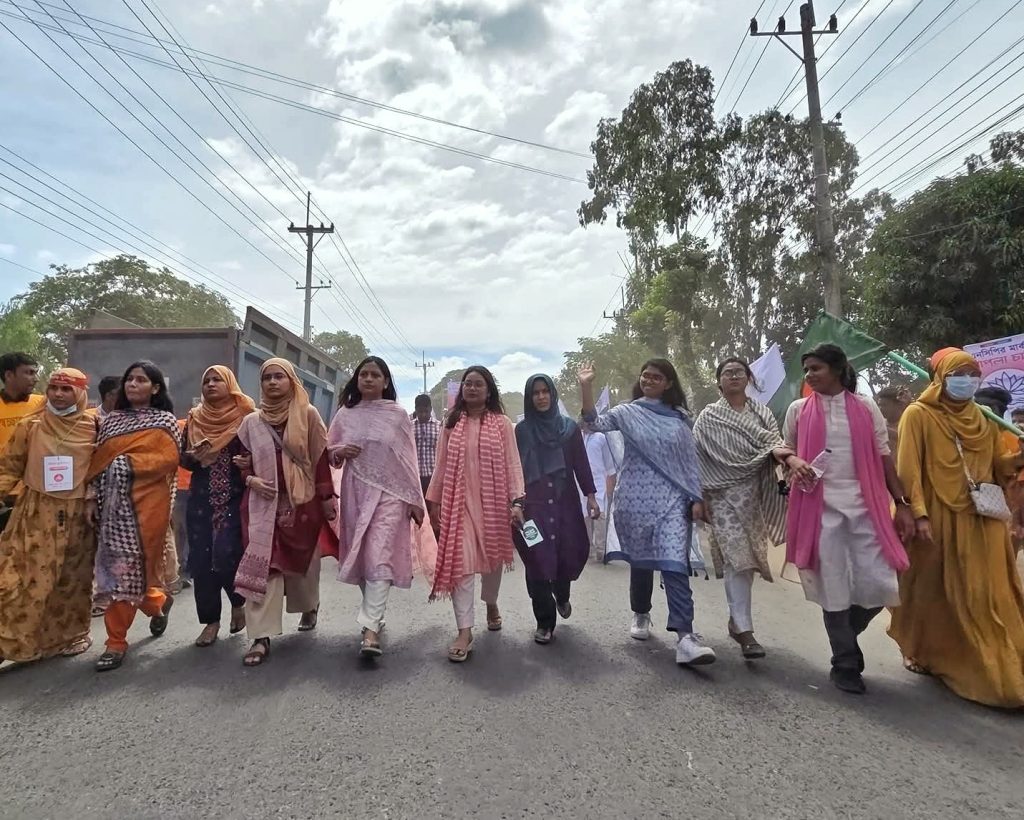
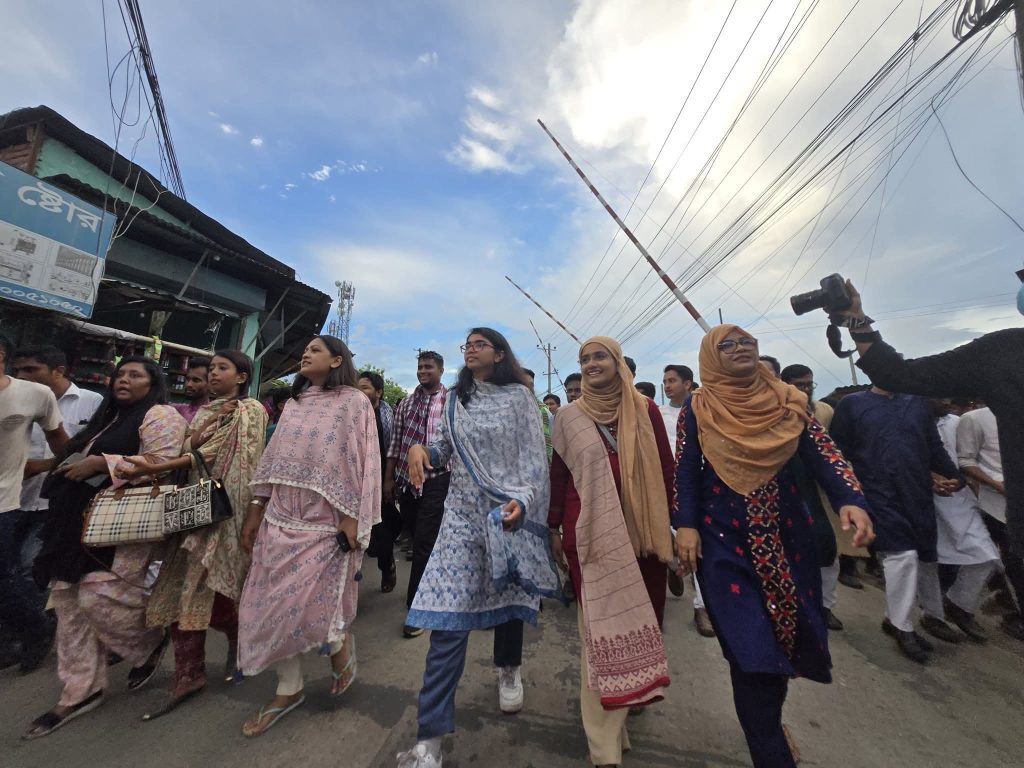
The street rallies are turning into public gatherings. The chants echo everything from the spirit and commitments of July to the dreams and resolve of building a new Bangladesh. Not only at the marches—mothers and sisters standing on nearby rooftops and balconies, waving their hands in welcome. In bazaars, shops, and local corners, curious onlookers gather as NCP’s slogans ripple through the crowd like waves. This overwhelming response proves one thing: the people had been waiting for the arrival of a new party born from the womb of a people’s uprising.
Under the scorching sun, walking four to five kilometers at a stretch, people along the roadside greet us with salutes, gestures of support, and kind words. Not once did that support feel imposed. The excitement on the faces of teenagers, elders, men, and women at seeing the leaders of the uprising in person was unmistakable. From villages to tea stalls in towns, there’s one whisper, one statement on everyone’s lips: “The new party has arrived.” It’s hard to remember the last time a political group was embraced so warmly and sincerely by the people.
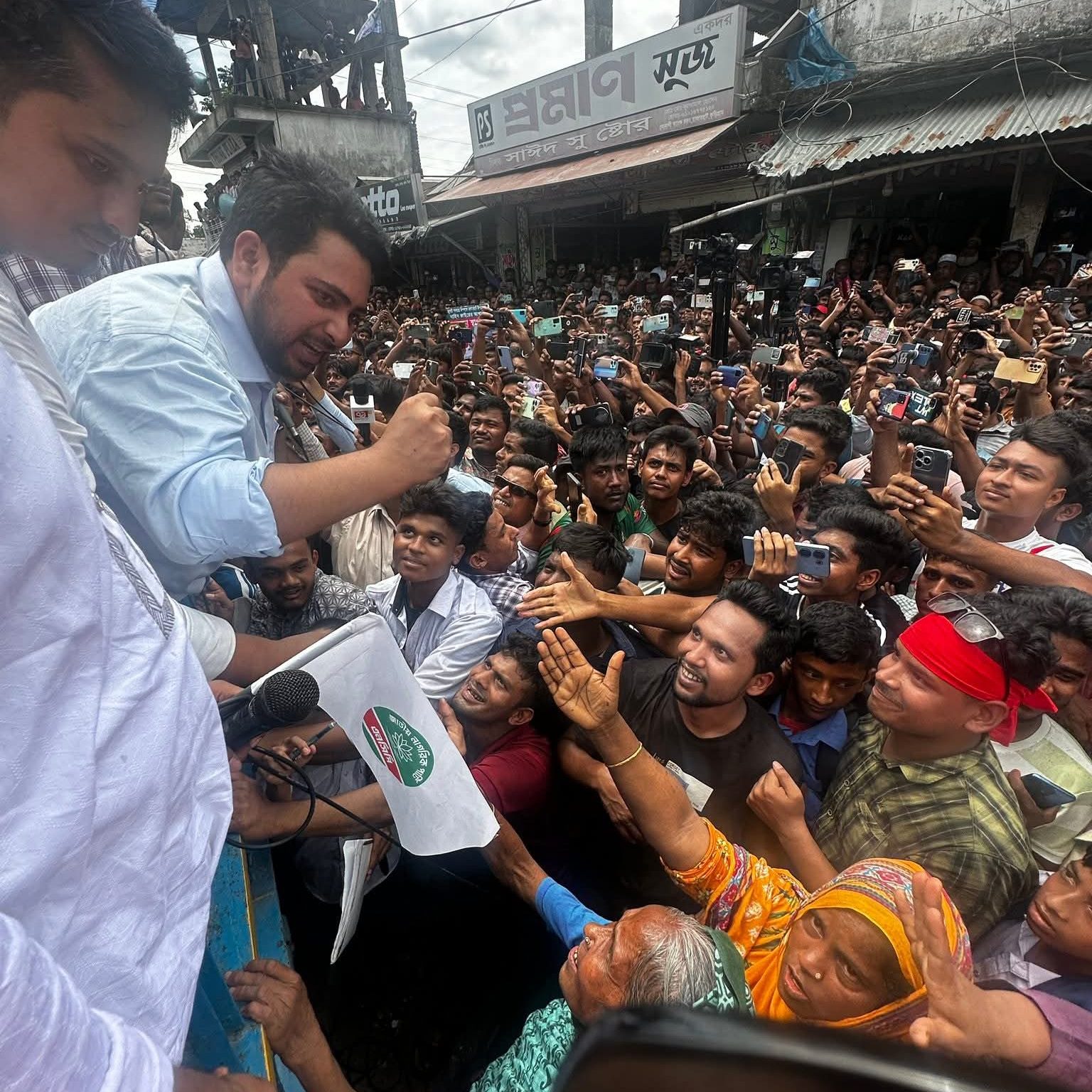
Nahid Islam’s Grassroots Engagement and New Hope
During various organizational tours and program implementations, top NCP leaders have visited the grassroots at different times. But for Nahid Islam, the chief leader of the uprising and NCP Convener, this was his first time engaging with people outside Dhaka. Upon meeting Nahid, it felt as if a refreshing shower of July embraced these people from the remote regions. Their words carried a message: to them, Nahid represents a new generation of leadership; the NCP represents a new hope worth believing in. Everyone—from the uncle at the tea stall to the housewives—welcomed the NCP with sincerity. And the youth? Their enthusiasm knew no bounds. To meet the leaders of the uprising in their own towns was electrifying.
A New Politics: Reaching the Non-Partisan Masses
For newcomers to national politics like me, this march and its connection to ordinary people is an invaluable experience. Listening to the people, understanding their demands, gives a much clearer picture of how our society lives and survives. I often say: those who support this new party NCP, or look to it with hope, are observing us from their homes. They may not come to rallies. Instead, it is we who must go to their doorsteps, to their communities. The massive section of the population that empowered the uprising is largely non-partisan, and they’re rarely seen at traditional political events. But politically and socio-economically, they are deeply aware—and they are NCP’s true center of gravity.
From the spontaneous support seen during the July March, it is clear the NCP is moving in the right direction. Certainly, the road ahead is long and full of obstacles. But this effort to reach every home, every doorstep, is what gives people hope—and helps them dream of a democratic future.
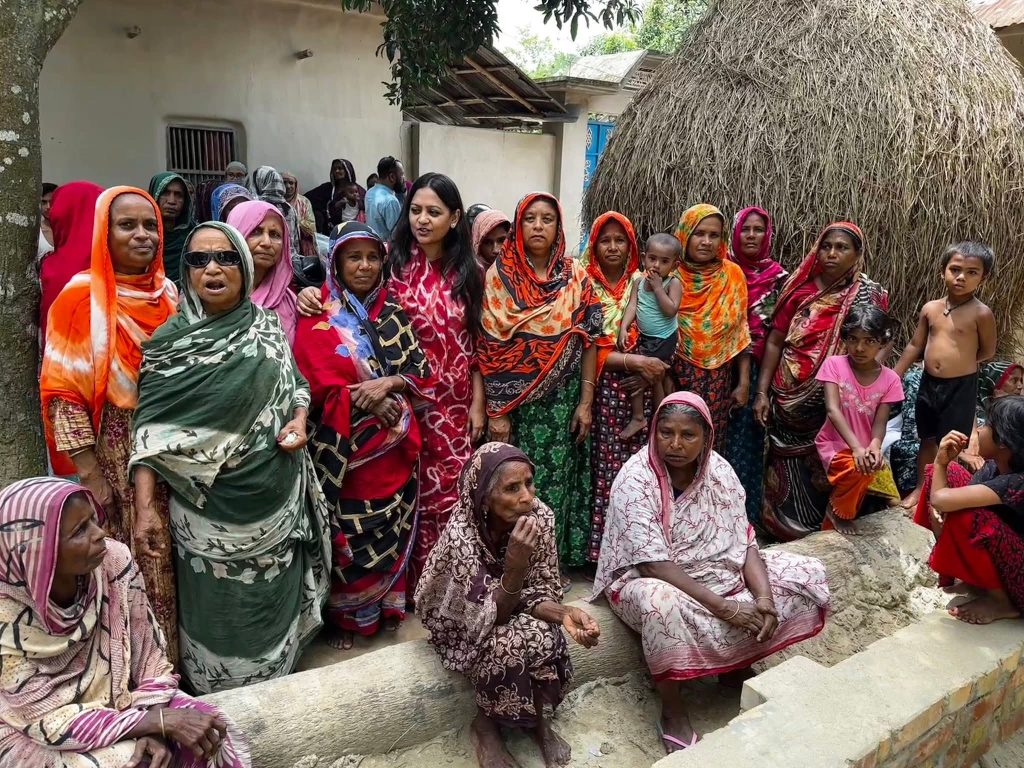
Women’s Leadership and the Essence of Reform
Everyone actively participating in the July March has this realization: a new chapter in Bangladesh’s political history is beginning through the NCP. The spontaneous participation of women in July is well-known, yet women’s participation in politics is much lower due to various socio-political equations and complexities. However, NCP’s female leadership is inspiring hope among local women leaders. Their involvement in mainstream politics, their determination to dismantle fascism, their push for fundamental democratic reforms, and their unwavering call for justice over the July massacre—all of it is encouraging women of all ages to reconsider Bangladesh’s politics.
From Dhaka’s intellectual circles to the political elite, it is often heard that people don’t understand reform, and that they are indifferent to the mass killing and oppression perpetrated by the Awami League. Yet, the ground reality completely contradicts such notions.
The People’s Real Demands
People want an end to bribery in government offices. Farmers want their debts gone, fair prices for their crops and free medical treatment when sick. Teenage girls cycling to school don’t want to be blocked from entering the mainstream. Mothers want safe maternal care during childbirth. People want an end to the syndicate that stretches from the crop fields to city supershops; this is the grand name for reform. People want to believe that the newcomers will not adapt to the old system; rather, they will continue to struggle for a new system. These people harbor a firm conviction regarding the judgment of the past fifteen years of illegal rule and oppression.
Heartfelt Encounters on the Road
After the march in Syedpur, as we waited for a car to take us to another town, a fruit seller invited me to sit inside his shop’s shade when I stood there under the intense sun. He turned his small table fan towards me and initiated a conversation. He asked about the NCP, inquiring about who are in the party. As we talked, a couple more shopkeepers joined in; none of them were involved in politics, but after Hasina fled, they were keeping track of the new party. They wanted to stand by the new party.
I asked, “Why?” The reply was, “Everyone loots; we hope the newcomers won’t usurp people’s rights.” When such conversations happen with strangers, I inadvertently feel a sense of accountability, a kind of responsibility. As I moved towards the car to leave, an uncle selling guava nearby washed a guava and offered it to me. He absolutely refused payment. With a distinct Syedpur accent, he said, “We are people of Syedpur, our hearts are very big, no money needed, just do good for the country.”

Becoming the Voice of the Dispossessed
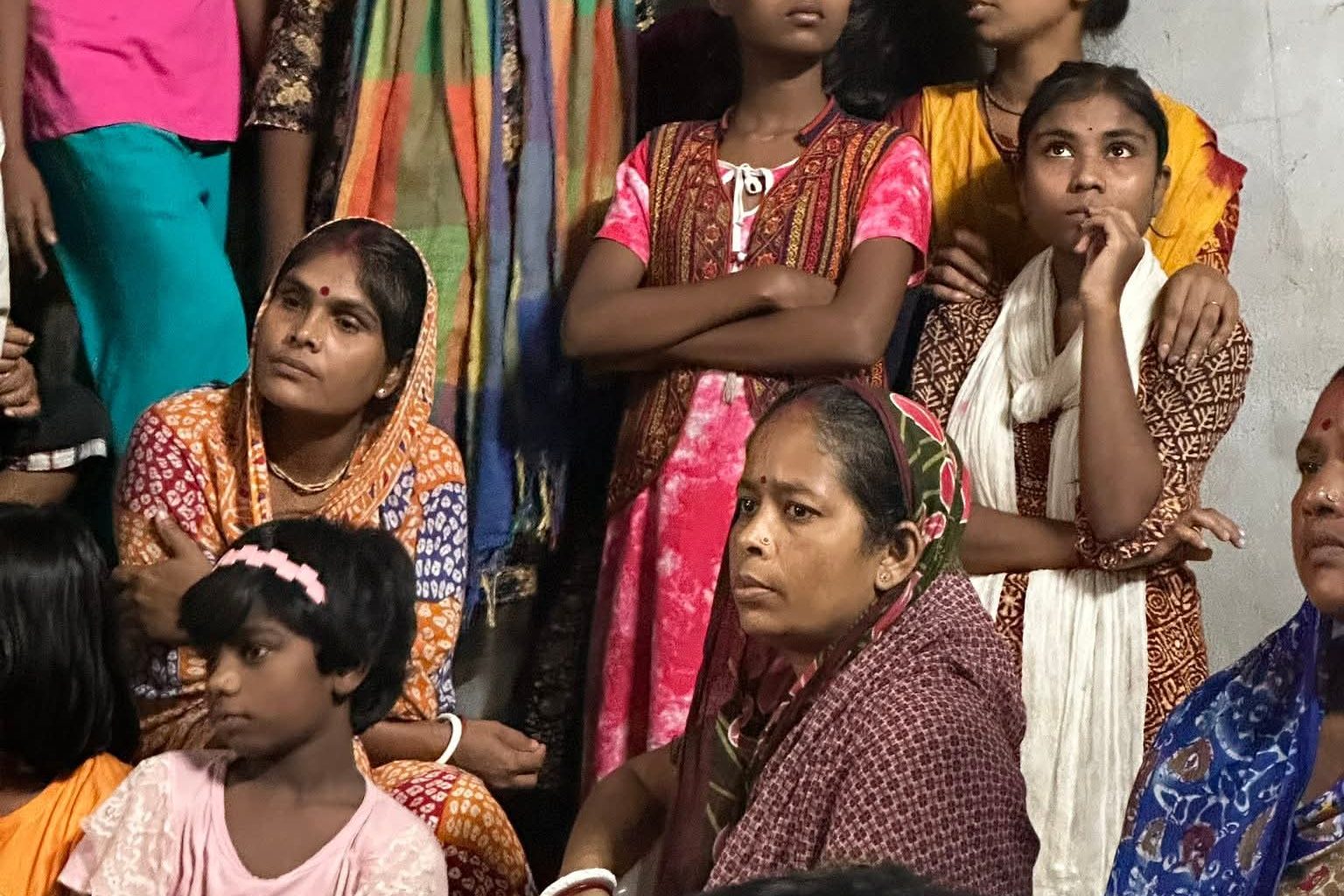
We’re collecting stories like these as we march. Through these interactions, the NCP will inevitably change too. We will learn why we must remain different from the old political class at any cost. In the narrow rooms of the Bihari Camp in Hathikhana—where five or six people share a single room—every conversation reveals another layer of injustice. These stories never seem to end. In this country, power shifts and governments rise and fall—but the lives of the marginalized remain stuck. The NCP must become their voice. It must look the power structure in the eye and move forward for the dispossessed.
It must work for those who don’t engage in politics, who see politics as a game of power, who are weary from their own struggles. And these are the very people who are now welcoming the new with open hearts.
Bridging the Gap: Basic Needs and Local Realities
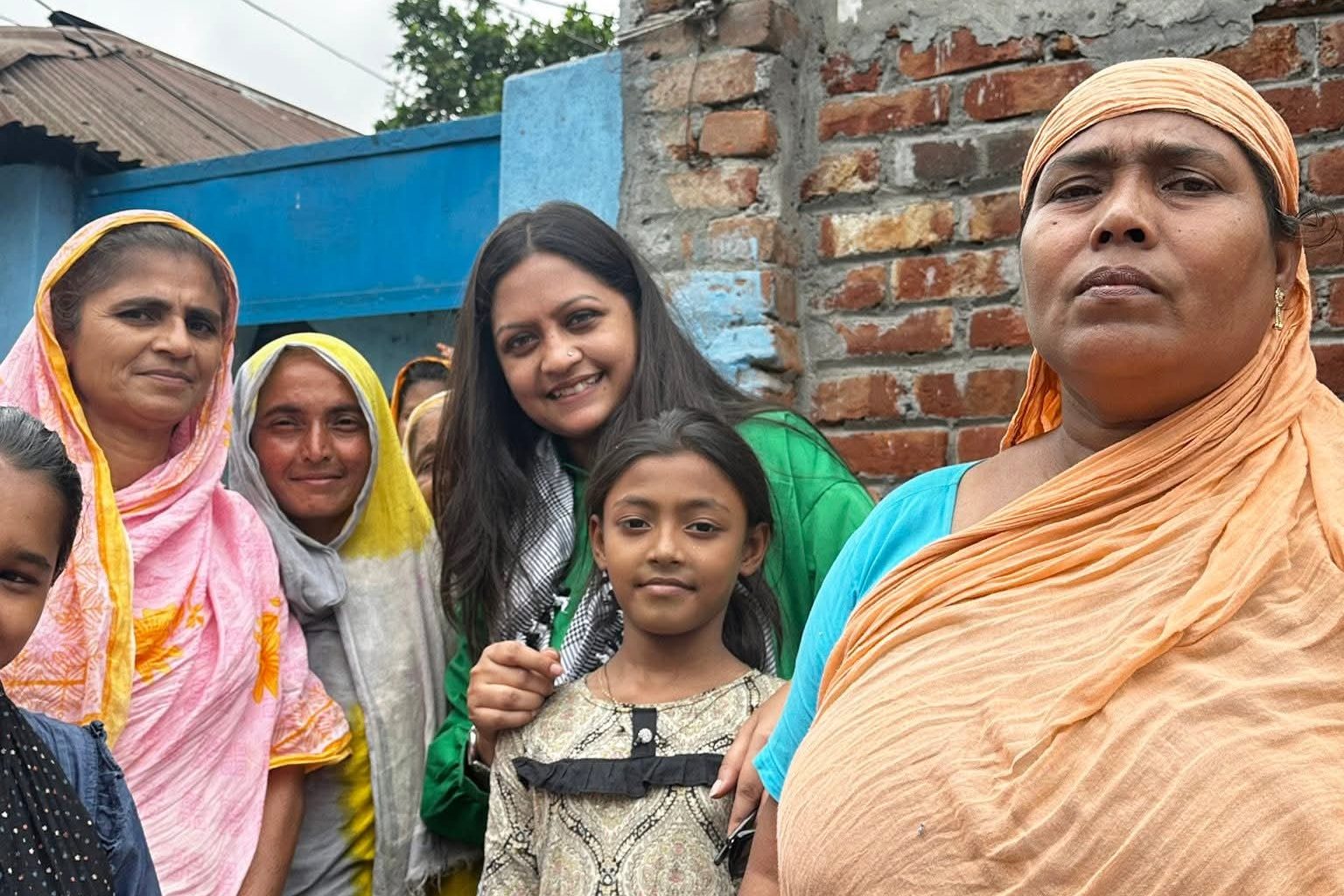
When everyone visited Shaheed Abu Sayeed’s house in Rangpur, a couple of us stepped out of the crowd and went to nearby houses. Curious crowds came out, but I felt the need to talk to the mothers, sisters, and brothers inside their homes. They welcomed us sincerely. Someone offered ripe mangoes from their garden, while another brought biscuits.
In conversation, they shared that they want a normal upbringing, education, and security for their daughters. They claimed they had no extraordinary aspirations for life, but if they fell ill, they had to travel far, even to Dhaka, for better medical treatment. They questioned why advanced healthcare wasn’t available in their own district.
This question is ours too. If people had proper arrangements for food, clothing, and medical care, most people in this country would be content. But ordinary hard-working people are deprived even of their most basic needs. It is this very gap—the gap between hard-working people and the fulfillment of basic needs—that NCP must bridge.
The Road Ahead: Challenges and the People’s Sovereignty
The NCP must step outside Dhaka’s urban bubble and keep this march going. Again and again, it must return to the grassroots, to speak out for their rights. This is the politics of empathy and responsibility we wish to uphold. The July March is already drawing praise from intellectuals, critics, and silent supporters alike. In district after district, people are responding with even more enthusiasm than expected. There is only one reason for this spontaneous response: people want change from the old order under the leadership of a new generation. There is only one reason for this spontaneous response: people want change from the old order under the leadership of a new generation. People believe that those who led the July Uprising and forced the fall of a fascist ruler can also successfully lead the creation of a democratic future.
And NCP has also understood that responsibilities are many, but so are the obstacles. Very little of the public wave generated daily in district after district through NCP’s July March activities, with 4-5 roadside meetings in two districts every day, is reaching the mainstream media. No matter how many obstacles arise in reaching the people, no matter how much effort is made to mislead people and question the leadership of students and the public, if this continues, NCP will find its place in the public’s heart, without needing any artificial waves. Even with the state law enforcement agencies, mainstream media, intelligence agencies, and the entire country in Hasina’s grasp, she could not be saved in the end. Hasina had to flee to a neighboring country.
The self-confidence gained by overthrowing the fascist regime must now be channeled into abolishing the fascist system altogether—toward a new democratic constitution and a new republic. And the July Uprising will repeatedly remind history that the people are the source of all power, the people are sovereign, and the people are legitimacy. When the dormant volcano of popular power erupts, the posturing of power collapses like a house of cards.


