Prices of rice and essentials skyrocket as civilians trapped in Kyaukphyu and Sittwe face hunger and displacement
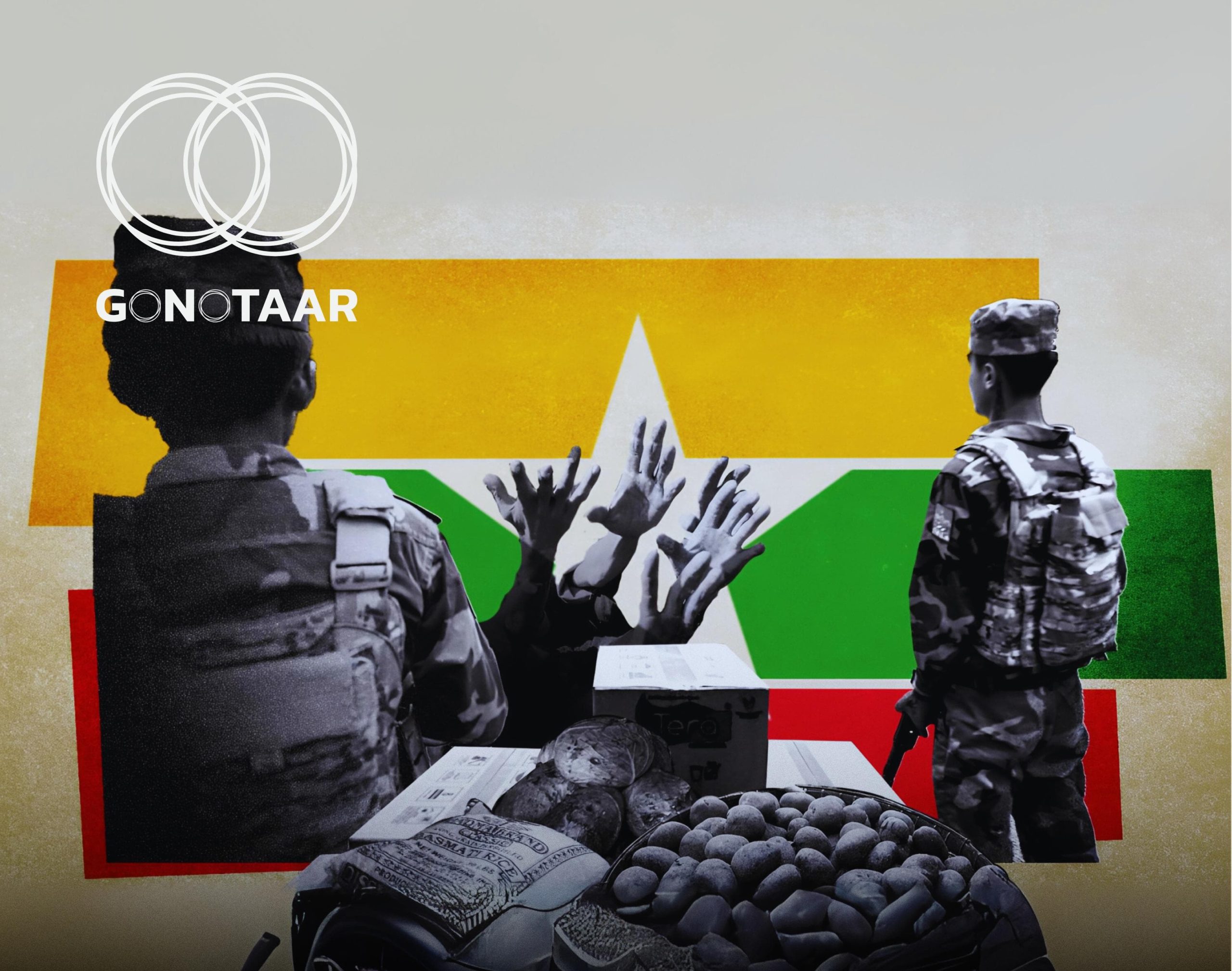
The ongoing fierce fighting between Myanmar’s military junta and the ethnic Arakan Army (AA) in Kyaukphyu and Sittwe townships in Rakhine State has led to a severe humanitarian crisis, with food prices skyrocketing. A resident of Kyaukphyu stated, “The military is unloading supplies from their ships and hoarding them, but they are not releasing any provisions for the general public.”
In Kyaukphyu, the price of a 50 kg sack of rice has reached approximately 500,000 Kyat (about 110 US dollars). The military government imposed a blockade on the town in early 2024, allowing only military-approved cargo ships to bring in rice, food items, and fuel from outside. Consequently, the town’s residents became entirely dependent on these limited shipments for their daily necessities. However, as the fighting intensified and moved closer to the town, the cargo ships have ceased their operations.
This halt in supplies has left locals struggling with a severe rice shortage and soaring prices for nearly a month. The price of high-quality rice from Yangon has surged from around 200,000 Kyat per sack to between 480,000 and 500,000 Kyat. Even lower-grade rice now costs approximately 350,000 Kyat per sack. Prices of other essential commodities have also escalated dramatically: a liter of cooking oil is now about 20,000 Kyat, an egg costs 1,800 Kyat, and 1 viss (approximately 1.6 kg) of onions is over 10,000 Kyat.
“Rice is completely scarce – people can’t even buy it,” said a Kyaukphyu resident, adding, “What little is available, people are consuming very sparingly. Daily wage earners can no longer afford rice because the skyrocketing prices have put everything out of reach. No rice is coming from the villages, and military cargo ships haven’t arrived for a long time.” Some low-income individuals and daily wage earners are surviving by eating thin gruel made from poor quality or broken rice.
A local woman reported, “Some people can still somehow buy and eat rice, but many are going hungry. Everyone is economizing – some are eating gruel, some are eating only one meal a day, and some are somehow managing by asking for rice from neighbors.”
Military sources indicate that the junta has been hoarding rice and food supplies for months for its own bases, including the Danyawadi naval base. Another Kyaukphyu resident confirmed, “The military is unloading supplies from their ships and hoarding them, but they are not releasing any provisions for the general public. They bring only one ship every few weeks. This is causing a shortage of goods and prices have skyrocketed.”
In Sittwe, which is under a similar blockade, the situation is worsening. Rice prices there have increased from around 200,000 Kyat to 250,000 Kyat per sack. The cost of firewood, coal, meat, and fish has also soared. A sack of coal, which previously cost about 10,000 Kyat, is now around 50,000 Kyat. Meat prices have reached approximately 70,000 Kyat per viss (1.6 kg), and fish prices are up to 100,000 Kyat per viss, according to residents trapped in the city. A homeless woman sheltering with her four-member family in a refugee camp in Sittwe stated, “It costs about 4,000 Kyat daily just to buy coal for cooking.”
In contrast, local sources report that in towns and villages controlled by the Arakan Army (AA), farmers are still able to cultivate crops, and rice is being sold at normal prices.
However, following the renewed fighting in late 2023, the military government closed all commercial routes connecting Rakhine State with the rest of the country. Subsequently, when the AA took control of most of the state, some border trade routes with India and Bangladesh reopened, which somewhat eased the financial pressure on locals.
Although many residents of Sittwe and Kyaukphyu have fled to safer areas, approximately 35 percent of the population remains trapped. They can no longer access AA-controlled safe zones; their only option is to travel to Yangon by air, but ticket sales are strictly controlled by the military government. The junta has established checkpoints at all entry and exit points and ports in the cities and laid landmines in between, which have caused numerous deaths and injuries.
Sources indicate that government employees working in Sittwe and Kyaukphyu are also unable to travel to Yangon and are forced to remain on duty there. The junta has forcibly relocated villagers from rural areas surrounding Sittwe into the city, a move strongly criticized by the Rakhine community and human rights activists, who view it as a tactic to use civilians as human shields. Currently, about 3,000 people are trapped in the city, often seeking refuge in relatives’ homes or monasteries.
A woman forcibly displaced from Ba Yan Phyu village, where the military committed a massacre in 2024, said, “We want to flee to the village, where there are at least some job opportunities. But now we are trapped in the city – no work, no income, yet everything’s prices are increasing.” She added, “Most people here are going hungry. We are more afraid of dying from starvation than from the war.”
Human rights activists have condemned the junta’s forced relocation as a war crime. U Myat Tun, director of the Arakan Human Rights Defenders and Promoters Association, stated, “The ruling regime has no regard for human lives. People trapped in Sittwe and Kyaukphyu cannot escape. They are being used as human shields. This is a clear violation of human rights.” He further reported that the military government is conducting daily raids and arrests in Kyaukphyu, with at least four civilians detained in the past month alone.
The Arakan Army now controls 14 townships in Rakhine State and is rapidly advancing towards the remaining three – Sittwe, Kyaukphyu, and Mrauk-U.