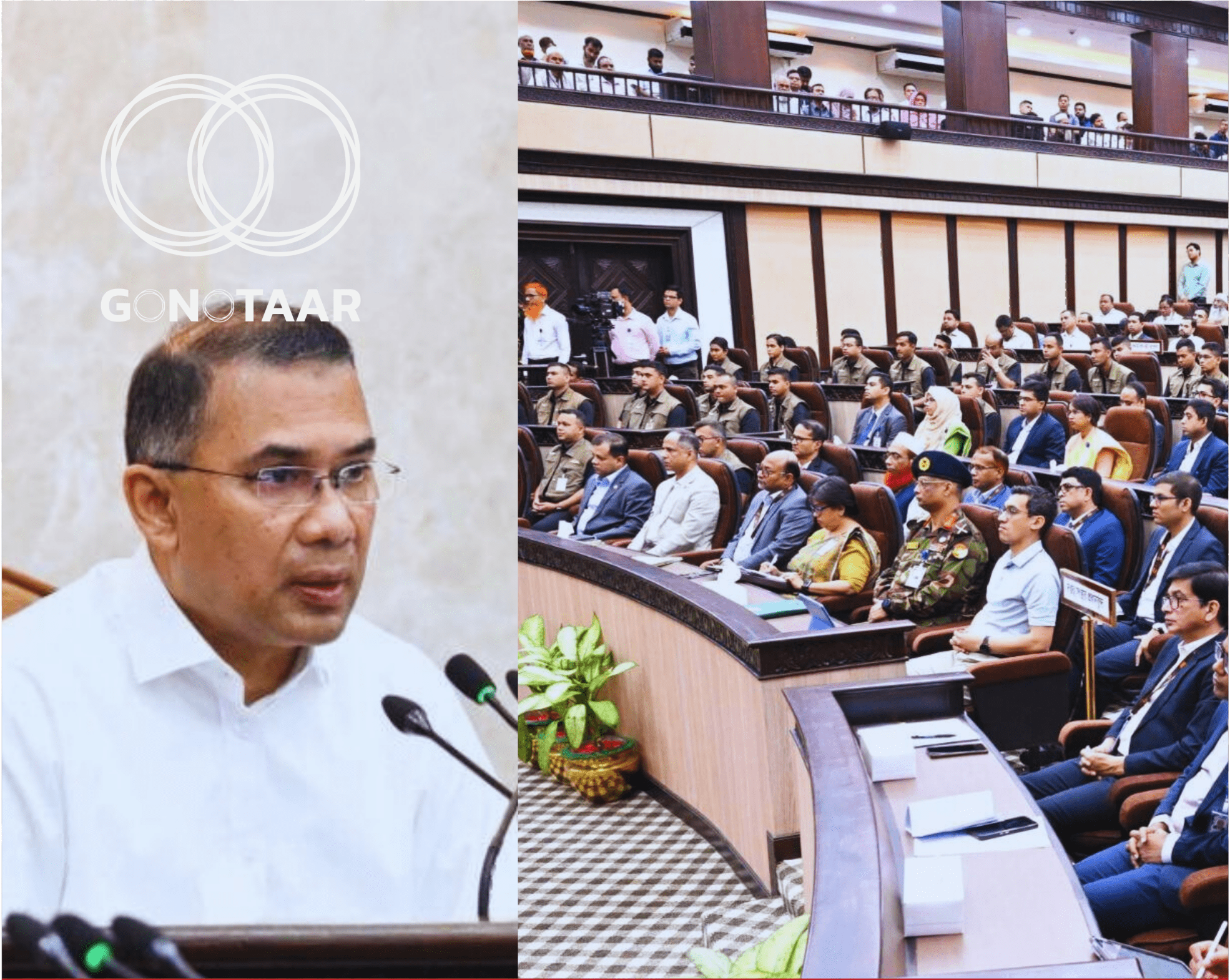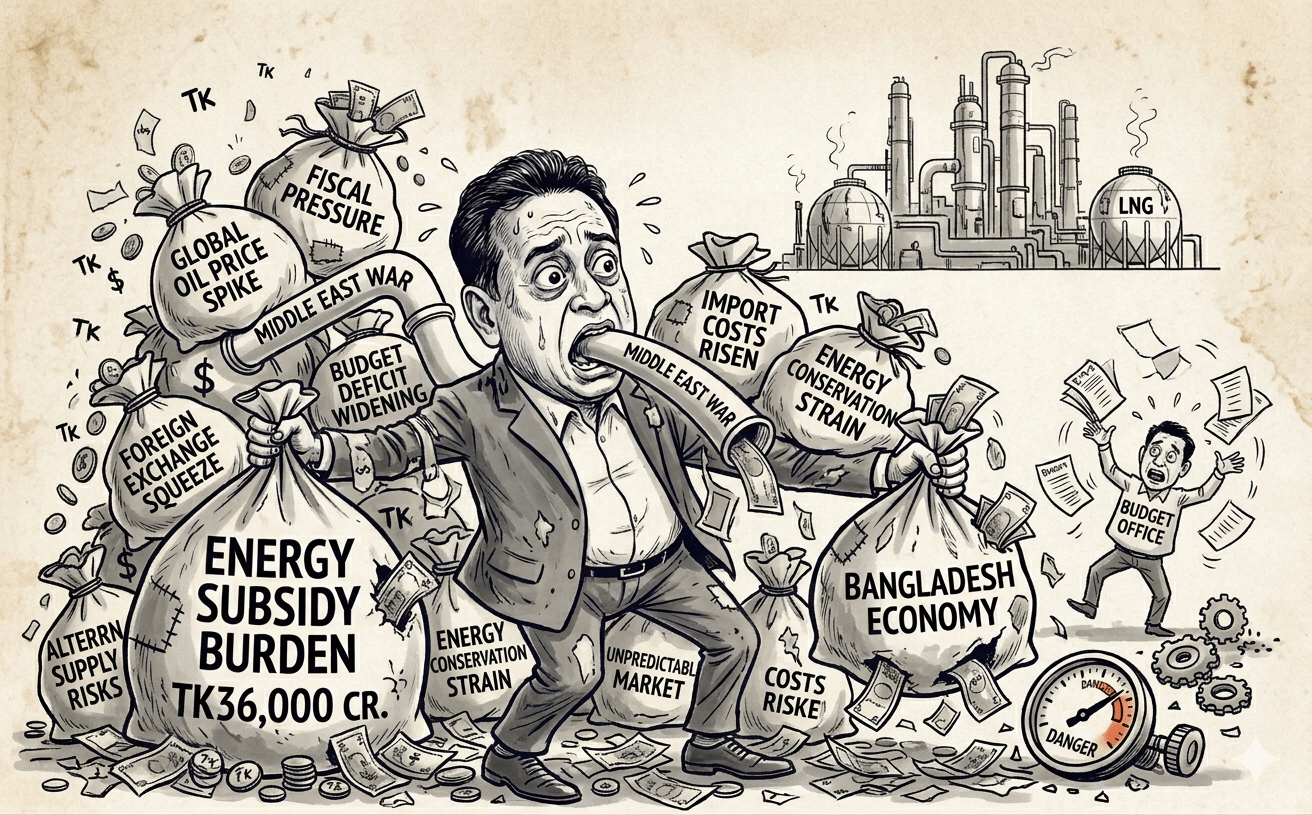
The ongoing conflict in the Middle East has dealt a significant blow to Bangladesh’s fiscal planning, with Finance Minister Amir Khosru Mahmud Chowdhury informing Parliament on Thursday that an additional Tk36,000 crore is required to cover soaring energy subsidies.
Addressing the House, the Finance Minister noted that the volatility in global energy markets—triggered by the US-Israeli war on Iran—has more than doubled the international prices of crude oil and liquefied natural gas (LNG). This price surge is expected to manifest between March and June of the current fiscal year, placing immense pressure on the national exchequer.
Escalating Fiscal Pressure
The Finance Minister, whose tenure began just ten days before the conflict erupted, highlighted the direct impact of the war on the domestic economy.
“This has raised concerns over a widening budget deficit on one hand and mounting pressure on foreign exchange reserves on the other, driven by an estimated additional import cost of around $3 billion,” Khosru stated.
Despite the global price hike, the Minister emphasized that the government has refrained from increasing domestic fuel prices to protect the public from further inflationary pressure. However, the surge in import costs has necessitated a search for additional budgetary support from international development partners to manage foreign currency constraints.
Strategic Response and Future Planning
To mitigate the crisis, the government has implemented several measures:
- Energy Conservation: National calls for reduced energy consumption to lower demand.
- Alternative Sourcing: Efforts to secure energy from diverse suppliers to ensure supply chain stability.
- Timely Disbursements: Ensuring subsidy funds are released promptly to maintain international procurement schedules.
Looking ahead, Minister Khosru mentioned that the administration has already begun drafting the budget for the 2026-27 fiscal year. He acknowledged the high public expectations following the recent elections, reaffirming the government’s commitment to building a “sustainable, transparent, and inclusive economy.”
“Fulfilling public trust and expectations remains a key commitment of the government,” he concluded, stressing that while the economy is not insulated from global shocks, strategic management remains a priority.