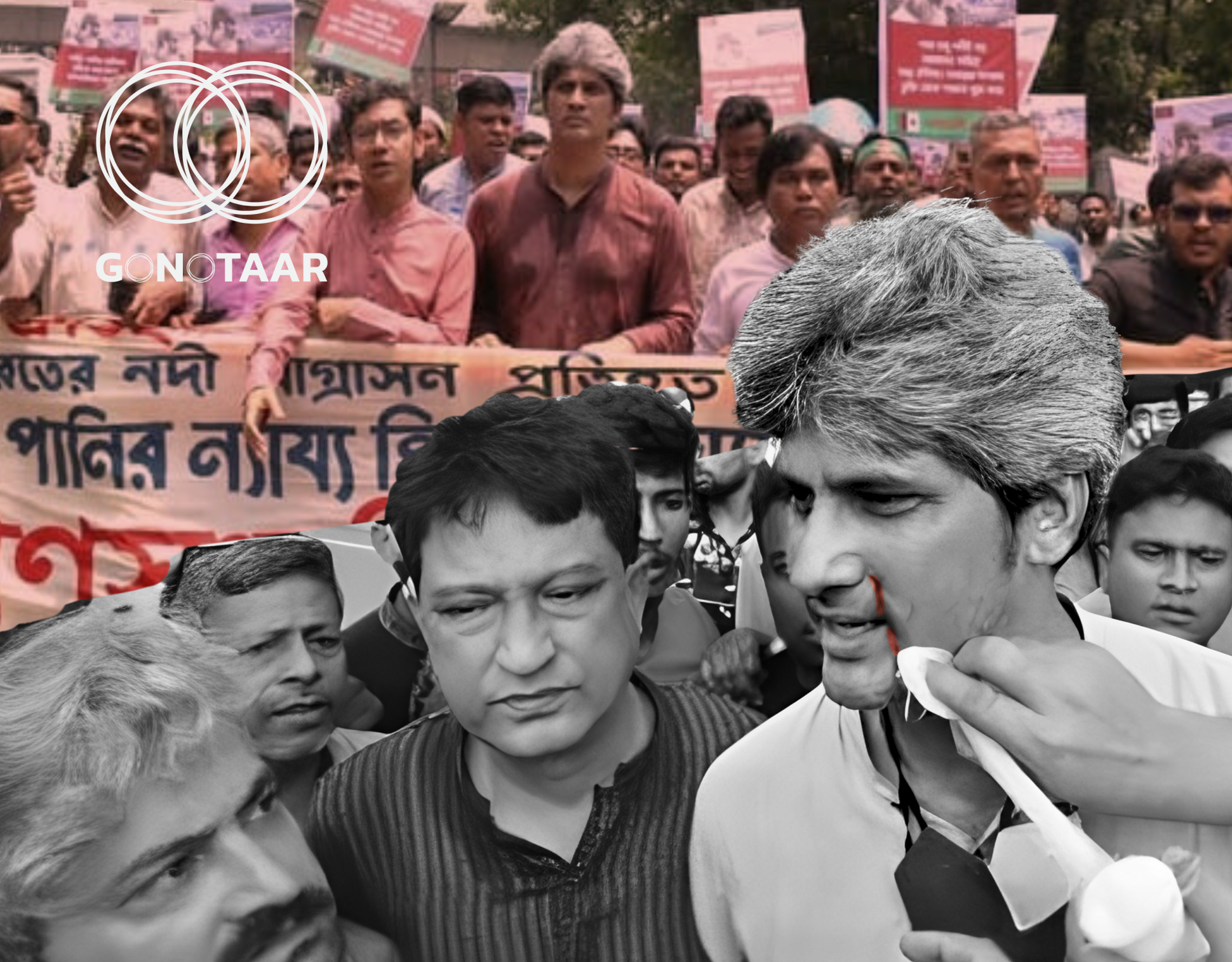
The 20th session of the National Consensus Commission (NCC) convened today to deliberate on appointments to key constitutional institutions, including the Public Service Commission (PSC), Anti-Corruption Commission (ACC), Office of the Comptroller and Auditor General, and the Ombudsman. However, the discussion was marked by a walkout from the Bangladesh Nationalist Party (BNP), which exited the meeting shortly after it began.
The session commenced at 11:30 AM at the Foreign Service Academy on Bailey Road, with a focus on institutional appointment mechanisms. BNP representatives abstained from joining the discussion at the outset, and later staged a brief walkout—reportedly “for some time only.”
Responding to questions from other political representatives regarding BNP’s absence, Commission Co-Chair Prof. Ali Riaz stated,
“BNP made it explicitly clear during the election commission discussion—on record—that they would not participate in dialogues concerning other institutions. This is consistent with that stance.”
He emphasized that a single party’s non-participation would not halt the proceedings.
“There have been previous instances where parties walked out or boycotted discussions, but the commission continued its work regardless,” he added.
Parliamentary Gender Representation Also on the Table
Commission adviser Monir Haidar, Special Assistant to the Chief Adviser, confirmed that the agenda also included deliberation on women’s representation in parliament. He added that if time permits, other pre-prepared issues would also be addressed during today’s session.
BNP’s Conditional Stance Behind the Walkout
BNP’s walkout appears to stem from a disagreement over the scope and mandate of a proposed constitutional appointments committee. On June 26, the party conditionally agreed to a proposal limiting an individual’s tenure as Prime Minister to a maximum of 10 years. However, they clearly stated that this agreement does not extend to the creation of a National Constitutional Council (NCC) or any similar committee for appointments to constitutional bodies.
BNP Standing Committee Member Salahuddin Ahmed remarked at the time:
“We support the 10-year PM tenure cap, but not the idea of appointing bodies or councils embedded in the constitution for other institutions. These two are interconnected.”
Following the Commission’s recent consensus announcement—led by Prof. Ali Riaz—supporting a lifetime 10-year cap for the office of Prime Minister, today’s agenda on constitutional appointments seems to have reignited BNP’s objection.
During today’s session, Salahuddin Ahmed reaffirmed BNP’s stance before walking out:
“We are stepping out for some time, as our position was already made clear. Embedding appointment committees for certain bodies into the constitution could create operational complexities in governance.”
In response, Akhtar Hossain, Member Secretary of the National Citizen Party (NCP), urged BNP to reconsider its walkout and return to the table, stating,
“For the sake of national interest, we urge BNP to rejoin the discussion.”
The commission is expected to continue its dialogue in the coming days, even amid intermittent boycotts. Whether BNP will return to the table remains to be seen—but the debate over institutional accountability and political control over appointments continues to stir significant divisions.