By Gonotaar | June 2026
On the same day — June 2, 2026 — two pieces of news came out of New York that together told a story Bangladesh should sit with.
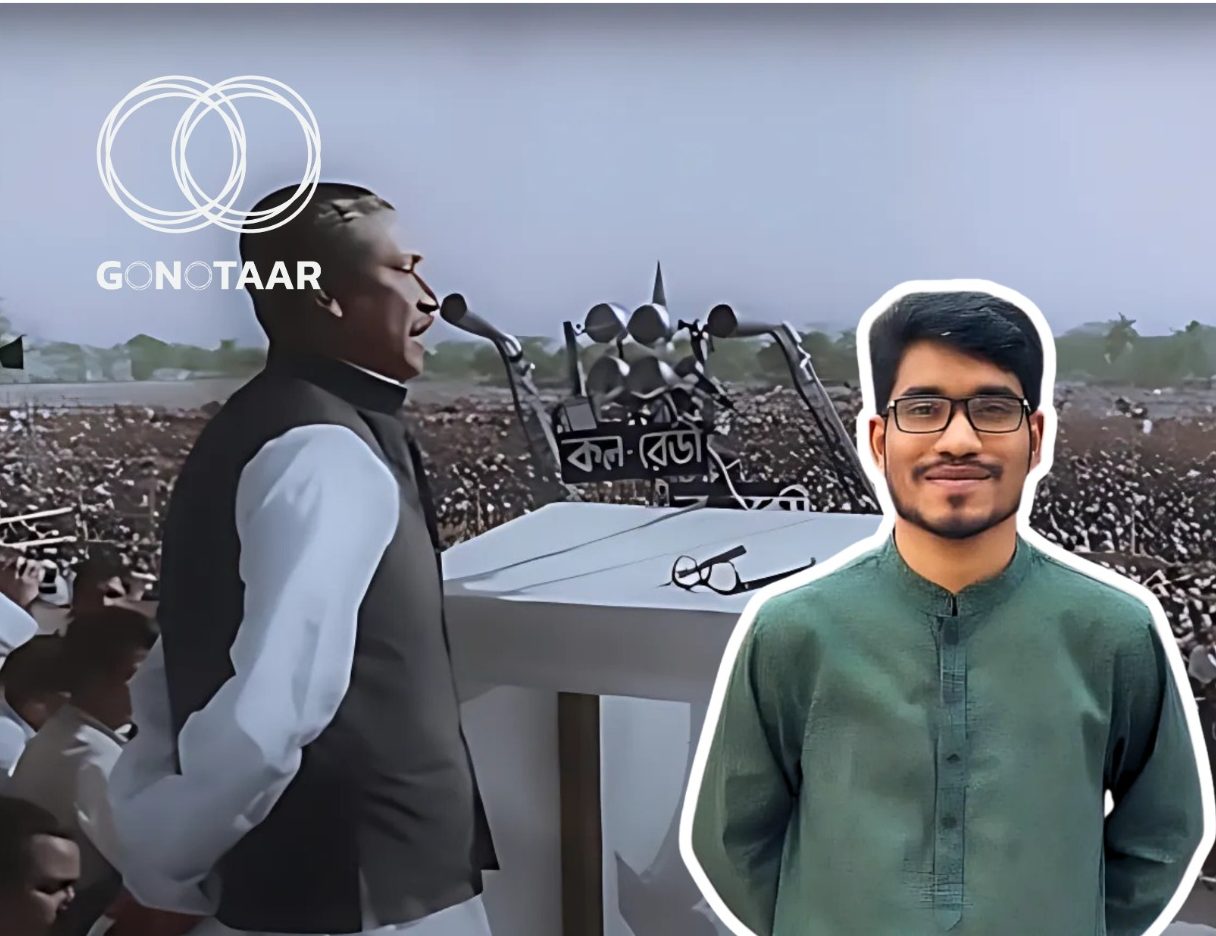
The first: Foreign Minister Khalilur Rahman was elected President of the 81st session of the United Nations General Assembly, beating Cyprus in a secret-ballot vote of 99 to 91. A veteran diplomat and economist — PhD from Harvard, decades at the UN in Geneva and New York — Rahman became the most senior Bangladeshi in the history of the United Nations. Prime Minister Tarique Rahman called it a reflection of Bangladesh’s “growing contribution and credibility on the global stage.” Indian External Affairs Minister Jaishankar sent his congratulations. The UN Secretary-General called it a guarantee of success.
The second: On that same day, the UN Committee for Development Policy formally recommended approving Bangladesh’s request to delay its graduation from Least Developed Country status — pushing the official timeline from November 2026 to November 2029.
One story was about a country ascending. The other was about a country that needed more time. Both were true simultaneously — and that tension is worth examining carefully.
What Is LDC Status, and Why Does It Matter?
To understand what Bangladesh just asked to postpone, you need to understand what LDC status actually means in practice — because “Least Developed Country” sounds like a stigma, but for Bangladesh, it has been something closer to a lifeline.
The United Nations classifies countries as LDCs based on three criteria: per capita income, a human assets index covering education and health, and an economic vulnerability index. Only 46 countries in the world currently hold this status. Bangladesh has held it for decades.
What comes with that status is a package of special privileges — most of them in trade. The most significant for Bangladesh is the European Union’s “Everything But Arms” (EBA) initiative, under which Bangladesh’s garments enter the EU completely duty-free and quota-free. For a sector that accounts for over 80 percent of Bangladesh’s export earnings and employs more than 4 million workers — most of them women — EBA has not been a small advantage. It has been the structural backbone of the country’s export economy.
The numbers make the stakes plain. Currently, roughly 75 to 78 percent of Bangladesh’s exports enter key global markets tariff-free because of its LDC status. Once that status ends, EU tariffs on Bangladeshi garments would rise from zero to 9–12 percent. In Japan, 7–13 percent. In Canada, 16–18 percent. Analysts estimate the total damage at a 6–14 percent drop in export earnings — potential annual losses of $1 to $7 billion, depending on which sectors are most exposed.
Beyond the EU’s EBA, LDC status also gives Bangladesh: concessional loans at low interest rates, TRIPS waivers allowing generic medicine production without patent penalties, flexibility in implementing WTO (World Trade Organization) rules, and access to special technology transfer agreements. All of that goes away — or begins going away — when graduation takes effect.
Bangladesh Met the Criteria — Comfortably
Here is a fact that should anchor the rest of this story: Bangladesh does not need a deferral because it failed to qualify for graduation. It qualified. Twice.
The CDP (United Nations Committee for Development Policy) reviews countries every three years. Bangladesh first met all three graduation criteria in 2018, and again in 2021. The UN General Assembly subsequently scheduled its graduation for November 24, 2026 — five years out — to give it time to prepare. Bangladesh not only met the criteria; the CDP noted in its most recent assessment that it continues to “exceed the graduation thresholds by a wide margin across all LDC indicators.”
This is not a country on the margins. Bangladesh is graduating because it grew. Because poverty fell. Because exports expanded. Because it built, over decades, one of the most remarkable development trajectories in South Asia.
So when the government of Bangladesh — first the interim government under Muhammad Yunus, then the BNP government that replaced it — formally requested a three-year extension, it was not because the country failed to develop. It was because the country is terrified of what comes next.
The BNP Government Reversed Course Overnight
The politics of this deferral are worth paying attention to.
Under the Yunus-led interim government, the business community had been strongly advocating for a delay, citing concerns about preparedness. The interim government initially appeared to share those concerns — then changed course and decided not to pursue a deferral.
Then BNP won the election. On its very first full day in office — February 18, 2026 — the Economic Relations Division sent a letter to CDP Chair Professor José Antonio Ocampo formally requesting an extension of the preparatory period until November 24, 2029.
The letter cited a long list of overlapping crises: the lingering effects of COVID-19, the Russia-Ukraine war, rising commodity prices, the Red Sea conflict and Middle East tensions, banking sector irregularities inherited from the Hasina era, the July 2024 uprising and political transition, and the ongoing burden of hosting displaced Rohingya nationals. These are real crises — none of them invented. But the speed of the reversal — from “we won’t pursue it” to “we applied on day one” — suggests that the deferral was less a carefully considered economic strategy than a political promise made to the business community.
The CDP, for its part, accepted the request but issued a careful caveat. It said Bangladesh’s case for an extension was reasonable — consistent with precedents set in five previous deferral cases globally — but it was blunt about expectations. The additional time must be used for domestic reforms. The committee specifically flagged financial sector stability, tax revenue, domestic resource mobilisation, capacity building, and economic diversification as areas where Bangladesh must show progress before 2029.
The Cliff That’s Actually a Slope (With a Drop at the End)
One thing often misunderstood in public discussion about LDC graduation is the timeline of the actual economic impact. Graduation does not mean tariffs change overnight. The EU’s standard practice is to provide a three-year transition buffer after LDC graduation. This means Bangladesh’s exporters continue to enjoy EBA-level zero-duty access until November 2029 — regardless of when formal graduation takes effect.
Now that the CDP has recommended extending the preparatory period to 2029, and the final decision rests with the UN General Assembly in September 2026, the effective scenario looks like this: formal graduation in November 2029, followed by another three-year EU transition buffer, meaning the actual tariff impact may not be fully felt until 2032. The BGMEA (Bangladesh Garment Manufacturers and Exporters Association) president welcomed this, noting that the combined effect would give the garment sector effectively six years to prepare.
But here is the critical question that this arithmetic obscures: what does “prepare” actually mean, and who is responsible for making it happen?
The EU does offer an alternative to facing standard tariffs after EBA expires: a scheme called GSP+(Generalized Scheme of Preferences Plus), which provides duty-free access to 66 percent of EU tariff lines, including apparel. But GSP+ comes with conditions. To qualify, a country must ratify and effectively implement 32 international agreements and conventions on human rights, labour rights, environmental protection, and good governance. It must also pass a safeguard mechanism test — its exports in any category cannot exceed 6 percent of the EU’s total imports in that category, and total exports cannot exceed 37 percent of EU imports overall.
Bangladesh has made real progress on the compliance side. It has ratified the key ILO (International Labour Organization) conventions — becoming the first country in South Asia to ratify Convention 190 on violence and harassment in the workplace, and the first in Asia to ratify all ten fundamental ILO conventions. The EU Ambassador has publicly praised this progress and called GSP+ a realistic pathway. But the EU has also been clear: ratification is not enough. They will examine implementation — factory safety, worker rights, environmental compliance, governance, and accountability — in detail. Ratification without enforcement is paperwork.
What the Budget 2026-27 Tells Us — and Doesn’
This is where the story connects to the present moment most directly.
Finance Minister Amir Khosru Mahmud Chowdhury placed Bangladesh’s largest-ever proposed budget before parliament on June 11, 2026 — Tk 9.30 lakh crore in total. It is the BNP government’s first budget, and it arrived amid weak growth, persistent inflation (9.04 percent as of May 2026), subdued private investment, and a delayed IMF programme.
Does the budget take LDC graduation preparation seriously? The honest answer is: partially, in rhetoric; insufficiently, in practice.
On the positive side, the budget does revise duties and taxes across 261 tariff lines as part of broader efforts to align Bangladesh’s trade policy with WTO compatibility. It proposes reducing customs duties, removing regulatory duties on selected products, and continuing tariff rationalisation — moves that economists acknowledge as relevant and directionally correct. It also acknowledges the need for export diversification, skills development, banking sector restructuring, and revenue system digitalisation. A Tk 60,000 crore Bangladesh Bank stimulus targets small and medium enterprises, closed factories, agriculture, and export diversification.
The government has also separately drafted an Action Plan for Bangladesh’s Preparation for LDC Graduation (2026–2029), focusing on macroeconomic stability, financial sector governance, fiscal reforms, business deregulation, export diversification, and institutional capacity. These are the right categories.
But several independent economists have been pointed in their critiques.
Dr Fahmida Khatun, Executive Director of the Centre for Policy Dialogue, noted that while the budget acknowledges the right issues, it does not set out an explicit LDC graduation strategy. Key areas — the erosion of trade preferences, compliance with environmental standards, logistics reform, productivity enhancement, and export market diversification — are not given sufficient attention or dedicated financing.
Professor Selim Raihan of Dhaka University, executive director at SANEM (South Asian Network on Economic Modeling), questioned the revenue assumptions underlying the entire budget. The government has set a revenue target of Tk 6.04 lakh crore from the National Board of Revenue — a sharp jump from the revised target of the outgoing fiscal year. Bangladesh’s tax-GDP ratio has remained below seven percent for years, not for lack of targets, but because the tax system is narrow, exemption-heavy, and administratively weak. Of 10 million registered TIN holders, only 30–35 percent are actively compliant. Analysts warn the revenue projection is optimistic to the point of being misleading — and if revenue underperforms, development spending gets cut, investment gets crowded out, or both.
Sector analysts were more direct about what the budget is missing. Bangladesh needs GSP+ compliance infrastructure financed explicitly in the budget — not just ILO ratification on paper, but environmental compliance systems, labour rights enforcement across all sectors including construction and agriculture, and factory-level auditing capacity. The budget also needs to make economic zones fully functional, with reliable energy, serviced land, and fast-track regulatory services, in order to attract the foreign investment that non-RMG sectors desperately need. And it needs to stop relying on cash subsidies and tax exemptions as export competitiveness tools — because the WTO phase-out of those instruments is non-negotiable after LDC status ends.
As one analyst put it bluntly: the budget must send one simple message. LDC graduation preparedness requires financed action, not merely policy statements. Most of the required reforms are already known. The question is whether anyone is financing and owning them.
The Structural Problem That Three Years Cannot Fix Alone
Step back from the budget specifics, and the deeper challenge comes into focus.
Bangladesh’s export economy is extraordinarily concentrated. RMG accounts for over 80 percent of export earnings. Seventy-two percent of those exports go to the EU and North America. The domestic value added in those garments is low compared to competitors. Efforts to diversify into pharmaceuticals, ICT, leather, and light manufacturing have been underway for years — but they have remained limited, underfunded, and without the kind of foreign investment linkages needed to connect those sectors to global value chains.
After LDC graduation, Bangladesh will need to compete against Vietnam, Cambodia, India, and others — many of whom already have free trade agreements with major markets that Bangladesh does not. Bangladesh has been negotiating FTAs with multiple partners, but FTA negotiations are slow, technically complex, and politically contested. The government has not secured a single major bilateral FTA.
There is also the question of TRIPS(Trade-Related Aspects of Intellectual Property Rights) — the trade-related intellectual property rights waiver that LDC status has provided. Its loss could raise medicine prices in Bangladesh by nearly 20 percent, with direct consequences for public health budgets and the pharmaceutical sector, which has been one of the few successful diversification stories.
And underneath all of this sits a systemic weakness that the CDP itself highlighted: Bangladesh’s banking sector. Non-performing loans are high. Governance deficiencies hamper financial intermediation. The IMF programme stalled because Bangladesh had not met conditions including banking sector reform and revenue collection targets. Without a functioning financial sector, the private sector investment that LDC transition demands cannot happen at scale.
Khalilur Rahman at the UNGA: Leverage, or Optics?
Return, then, to the man who was elected on June 2 to lead the world’s most representative deliberative body.
Khalilur Rahman is no stranger to the institutions Bangladesh must now navigate. He spent 25 years inside the UN system, holding senior positions in New York and Geneva, including as special adviser at UNCTAD (United Nations Conference on Trade and Development) — the UN body that directly handles LDC graduation issues. He was Bangladesh’s High Representative on the Rohingya crisis before becoming Foreign Minister in February 2026. He is, by background and experience, exactly the kind of diplomat Bangladesh needs in the room when it is simultaneously asking the UN for more time and trying to convince the EU it is ready for GSP+.
His UNGA presidency begins in September 2026 — the same month the General Assembly is expected to take its final decision on Bangladesh’s LDC deferral request. His six stated priorities as UNGA President include accelerating SDG progress, climate action, and development financing gaps — all directly relevant to what Bangladesh is navigating. He has pledged to strengthen the UN’s effectiveness at a time when multilateral institutions are under unprecedented pressure.
The opportunity is real. A Bangladeshi presiding over the General Assembly at the moment his own country’s graduation deferral is being finalised gives Bangladesh not just symbolic weight, but genuine procedural access. It places a credible, internationally respected diplomat at the centre of conversations about trade, development, and reform where Bangladesh’s interests are directly at stake.
But there is a risk of confusing diplomatic prestige with economic preparation. Rahman’s election is a triumph for Bangladesh’s foreign policy credibility. It does not replace the factory compliance systems, the revenue reforms, the FTA negotiations, or the banking sector restructuring that LDC transition actually requires. Those are domestic tasks — unglamorous, technically complex, and politically costly. They happen in Dhaka, not New York.
What Bangladesh Must Actually Do With Three More Years
The CDP was explicit: the deferral must not be used to delay reforms. It must function as a strategic window, not a finish line.
What does that mean in practice?
On trade: Bangladesh needs a market-by-market, product-by-product roadmap for what happens to its preferential access — under EBA, GSP+, and bilateral FTAs — and when. It needs dedicated compliance and rules-of-origin readiness at both the factory level and the border. It needs to advance FTA negotiations with the EU, India, China, Japan, and ASEAN markets simultaneously, knowing that each negotiation has a different timeline and set of demands.
On GSP+: Ratifying ILO conventions was necessary. Now Bangladesh must demonstrate actual implementation — in EPZs, in construction, in agriculture, not just in the visible garment factories that EU auditors already know how to inspect. The EPZ Labour Act still needs amendment. Child labour elimination is still incomplete. Social dialogue mechanisms remain weak.
On diversification: Bangladesh cannot reach a post-LDC world on the back of knitwear and T-shirts alone. It needs anchor investors in export-oriented sectors like pharmaceuticals, electronics, light engineering, and agro-processing. This requires economic zones that are actually functional — with reliable power, serviced land, customs facilitation, and skilled labour. The budget’s Tk 60,000 crore stimulus is a start, but economic zones have been promised for years with limited results.
On revenue: The tax-GDP ratio must improve, or Bangladesh will not have the fiscal capacity to fund any of the above. This means expanding the tax base, automating customs, eliminating distortionary exemptions, and — critically — separating tax policy from tax administration, which the budget has proposed but not yet delivered.
On banking: The financial sector must be stabilised. Non-performing loans must be addressed. The IMF programme conditions must be met, not because the IMF matters intrinsically, but because meeting those conditions is the work that makes everything else possible.
The Question That Cannot Be Avoided
Bangladesh has bought three years. The question is whether it intends to use them differently from the five it just spent.
The five-year preparatory period from 2021 to 2026 was supposed to be Bangladesh’s runway for smooth transition. That period was disrupted — genuinely so — by COVID, by the Russia-Ukraine commodity shock, by the political crisis of July 2024 and the fall of the Hasina government. These disruptions were real, and the CDP acknowledged them in recommending the extension.
But disruptions explain delays; they do not explain the absence of a credible plan. As of June 2026, Bangladesh does not yet have a completed, costed, time-bound transition strategy with named owners for each reform. The Action Plan for LDC Graduation (2026–2029) that the government drafted is a list of the right categories. It is not yet a strategy.
And the budget — Bangladesh’s most powerful annual policy tool — does not yet translate the urgency of LDC transition into the kind of financed, specific, accountable commitments that the deadline requires.
This is the tension that Khalilur Rahman’s election on June 2 encapsulates perfectly. Bangladesh can win a vote at the United Nations by 99 to 91. It can place a brilliant diplomat in the presidency of the General Assembly. It can point to its LDC deferral as prudent economic planning.
All of that is true. And none of it replaces the harder work — the boring, contested, domestically unpopular work of reforming the tax system, enforcing labour rights in the EPZs, making the economic zones actually functional, and building an export economy that does not collapse when the preferential tariffs run out.
Three years is enough time to do that work. Whether Bangladesh uses three years that way — or whether it uses them the same way it used the last five — is the real question this deferral poses.