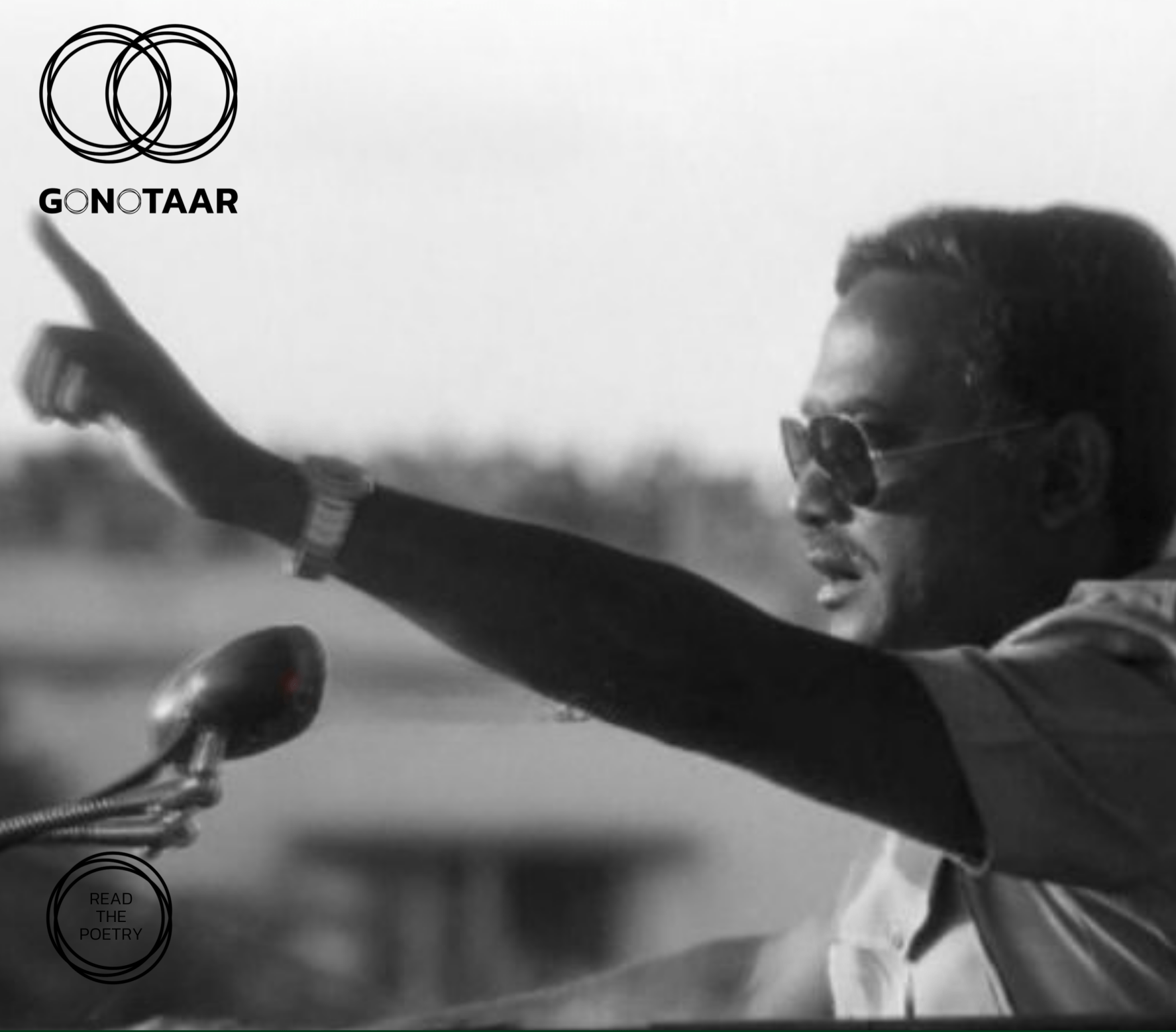
The history of Bangladesh’s Liberation War is marked by moments when individual courage altered the course of a nation. Among these defining moments stands the historic declaration made by Major Ziaur Rahman in March 1971, a broadcast that electrified a besieged people and announced to the world that Bengalis had chosen resistance over submission. His words, particularly the resolute call of “We revolt,” were not merely a military signal. They became a moral proclamation of independence at a time when the fate of the nation hung in uncertainty.
The political crisis of Pakistan reached its breaking point after the general elections of 1970. Sheikh Mujibur Rahman’s Awami League secured an absolute majority in the National Assembly, yet the transfer of power was deliberately obstructed by the West Pakistani military and political establishment. What followed was a calculated strategy of delay, deception, and intimidation.
On the night of March 25, 1971, the Pakistan Army launched Operation Searchlight, a brutal military crackdown aimed at silencing Bengali political leadership and crushing popular resistance. Dhaka University, residential areas, and key institutions were attacked with indiscriminate violence. In a matter of hours, the political movement for autonomy transformed into an existential struggle for survival.
Amid this chaos, communication collapsed. Leaders were arrested or forced into hiding. The people of East Pakistan, soon to be Bangladesh, faced a terrifying question: who would speak for them, and who would lead them into resistance?
It was in this moment of darkness that Major Ziaur Rahman, then a mid-ranking officer of the Pakistan Army stationed in Chattogram, emerged as a decisive voice. On March 27, 1971, from the Kalurghat Radio Station, he made a broadcast that would echo through history.
Speaking first on behalf of Sheikh Mujibur Rahman and later in his own capacity, Major Ziaur Rahman declared the independence of Bangladesh and called upon the Bengali people to resist the occupation forces. His message was clear, uncompromising, and urgent. The phrase “We revolt” captured the spirit of a people who had crossed the point of no return.
This was not a carefully scripted political address. It was a battlefield declaration, delivered under the constant threat of aerial bombardment. The radio station itself was a target. Yet the risk did not silence him. Instead, it lent authenticity and gravity to his words.
The significance of Major Ziaur Rahman’s announcement lies not only in what he said, but in when and how he said it. At a time when confusion reigned and leadership appeared fractured, his broadcast provided clarity. It told the people that resistance was legitimate, organized, and inevitable.
For the freedom fighters, the declaration served as a rallying point. For civilians, it was reassurance that the struggle had direction. For the international community, it was an unmistakable signal that what was unfolding in East Pakistan was not an internal disturbance, but a war of national liberation.
Importantly, Major Ziaur Rahman’s declaration translated political aspiration into military reality. It bridged the gap between the Six-Point Movement, the mass uprising of 1969, and the armed resistance of 1971. In doing so, it helped consolidate the moral and strategic foundation of the Liberation War.
Major Ziaur Rahman’s role in 1971 did not end with the radio broadcast. Throughout the war, he commanded Z Force, one of the key sectors of the Mukti Bahini. His leadership on the battlefield further reinforced the credibility of his earlier declaration. He was not merely a voice behind a microphone. He was a commander who shared the risks of his soldiers.
This combination of symbolic and practical leadership distinguishes Major Ziaur Rahman’s contribution. The declaration of independence was not an isolated act of defiance. It was part of a sustained commitment to the liberation struggle.
Debates over the formal declaration of independence have long occupied Bangladesh’s political discourse. Different narratives emphasize different moments and figures. Yet history is not only written in documents. It is also forged in moments of action, when delay would have meant defeat.
Major Ziaur Rahman’s announcement stands as one such moment. Regardless of political interpretation, it is undeniable that his broadcast played a crucial role in mobilizing resistance at a critical juncture. The words “We revolt” distilled the collective will of a people who had already paid a heavy price for their aspirations.
The declaration made by Major Ziaur Rahman in March 1971 remains one of the most powerful episodes of Bangladesh’s struggle for independence. It was a declaration born of urgency, courage, and historical necessity. At a time when silence could have prevailed, he chose to speak. At a moment when fear could have paralyzed, he chose resistance.
In remembering the Liberation War, it is essential to acknowledge such acts of decisive leadership. Major Ziaur Rahman’s historic announcement did not create the desire for independence, but it gave that desire a voice when it was needed most. In that sense, “We revolt” was not just a statement. It was the sound of a nation being born.