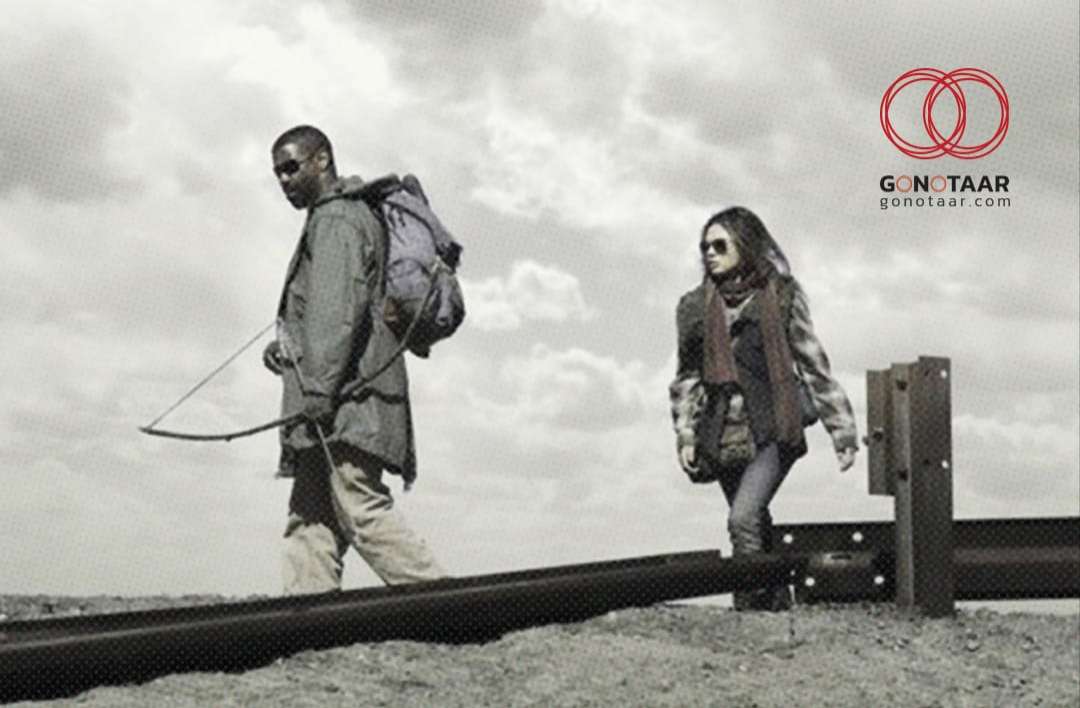
Watching The Book of Eli doesn’t feel like simply sitting through a post-apocalyptic movie—it feels more like walking through a ruined world alongside a man who already knows where he’s going, even when the rest of humanity has forgotten how to ask why. The film unfolds slowly, deliberately, as if it wants you to breathe in the dust, the silence, and the moral emptiness before it tells you its real story.
Denzel Washington’s Eli enters this world quietly. He isn’t loud, heroic, or eager to prove himself. He moves with certainty, not confidence—the kind that comes from belief rather than strength. There’s something deeply human in the way Washington plays him: calm on the surface, burdened underneath. You sense that Eli isn’t just surviving the wasteland; he’s carrying responsibility, doubt, and faith all at once. His violence, when it comes, feels necessary, almost reluctant—never celebrated.
Then there’s Carnegie, played brilliantly by Gary Oldman. He’s not a villain who shouts or rages; he listens, observes, and waits. Carnegie understands something terrifyingly real about people: when they’re broken and afraid, they don’t just want food or shelter—they want meaning. And meaning, in the wrong hands, becomes power. Oldman makes Carnegie unsettling because he isn’t insane; he’s logical. He believes control is the only way order can exist, and that belief makes him dangerous.
What makes The Book of Eli linger in your mind is its atmosphere. The world feels dry—not just in landscape, but in spirit. Colors are drained, towns are hollow, and even conversations feel cautious, as if words themselves have become risky. The film understands human psychology well: when society collapses, trust collapses faster. People look at each other not as neighbors, but as threats or opportunities.
The action scenes are sharp and sudden, never flashy. They arrive like real violence does—fast, uncomfortable, and final. There’s no glory in them, and that choice matters. It keeps the focus on Eli’s inner journey rather than turning him into a mythic superhero.
As the story progresses, the film gently nudges you toward bigger questions without forcing them down your throat. What happens when books disappear? When people can’t read, can’t interpret, can’t question? Is faith something that saves us—or something that controls us? The film doesn’t offer easy answers, and that’s its strength.
The final revelation hits quietly, almost humbly. It doesn’t ask for applause; it asks for reflection. Suddenly, Eli’s journey feels less about reaching a destination and more about preserving something fragile in the human spirit. It reframes everything you’ve watched, not with shock, but with meaning.
The Book of Eli isn’t perfect. Some characters feel like symbols more than people, and at times the pacing demands patience. But maybe that’s intentional. This is a film that wants you to slow down, to listen, to think.
In the end, The Book of Eli stays with you because it understands something deeply human: when the world falls apart, survival alone isn’t enough. We cling to stories, words, and beliefs—not because they feed us, but because they remind us who we are.