By Siam Al Zaki
Writer
“The old world is dying, and the new world struggles to be born: now is the time of monsters.”
— Antonio Gramsci
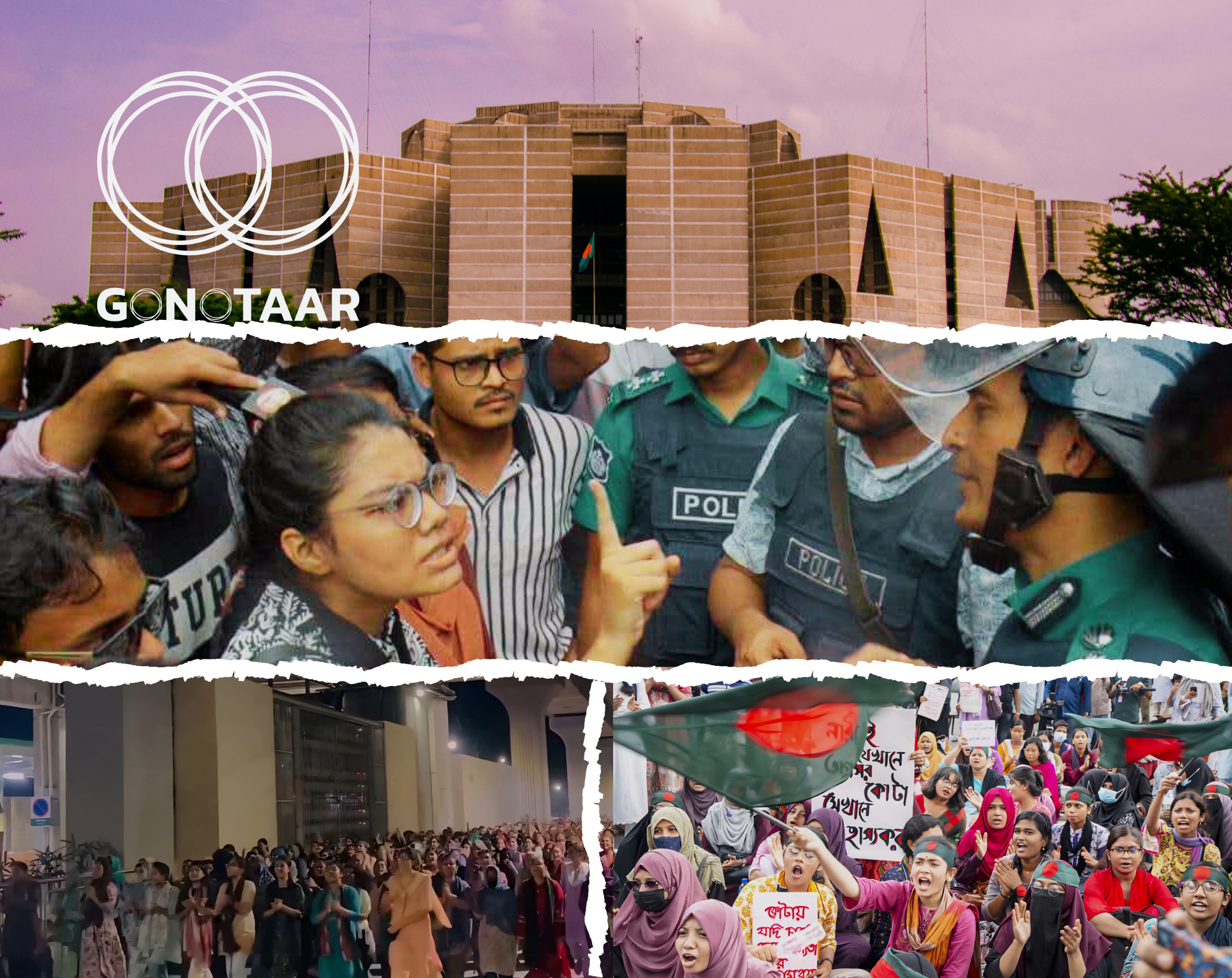
We are standing on the eve of the one-year anniversary of the bloody July mass uprising, and that’s why we now need to try to create a picture of expectations and reality.
In the aftermath of the July uprising, we were overwhelmed, thinking that we could form a new state. We just confined ourselves to utopian illusions without any real solutions, and at that time, everything seemed very easy. This is why our natural hopes turned into something lofty, and when we were confronted with reality, we became very disappointed and confused. Actually, that was when we realized that we should have taken some cautious steps toward the post-uprising reality.
Ordinary people had clear expectations from the post-uprising period and those expectations were deeply rooted in real, lived demands. But too often, their voices were neglected. Instead of focusing on what people truly needed, we spent time on abstract debates and ideological posturing.
Let me give some simple examples of what people actually wanted:
An urban middle-class employee wanted a functional public transportation system.
A rural farmer wanted better opportunities for cultivation.
A student wanted a quality education system that made learning enjoyable.
What the people actually wanted from the mass uprising was to ensure better opportunities in their daily lives. In other words, structural reforms and the ruling class has failed miserably to deliver that.
Yes, of course, there were some positive developments, like the lower prices of goods during Ramadan. But that doesn’t cover the overall failure and disappointment following the coup.
There is also frustration among people about the political turmoil in the country. Many have already died in party conflicts, the social lives of many are being damaged through unnecessary tagging on social media, and the scourge of extortion is still evident.
The bigger problem is that the common people of the country are being pushed into an unnecessary political debate on reforms and elections, and this is harming the true desire of the mass uprising: “reform.”
After the uprising, there were three urgent priorities everyone seemed to agree on:
- Ensuring the Awami League’s crimes were brought under judicial scrutiny.
2. Providing proper treatment to the injured.
3. Rehabilitating those affected.
Each of these tasks is progressing slowly, and that makes everyone more disappointed — a catastrophic hopelessness is just girdling around.
For these reasons, the quote by Gramsci given at the beginning of the article is relevant. Its main theme is that the transitional period — until a new power is born — has nothing to offer. That’s why one thing we can do now is give our hopes a realistic shape.
“Rebellion cannot exist without the feeling that somewhere, in some way, you are justified.”
— Albert Camus
Camus reminds us how revolutions often lose their soul when they become disconnected from the ideals that once justified them. When that happens, they drift toward emptiness or even new forms of authoritarianism.
Actually, the truth is, post-revolutionary regimes often become detached from the popular energy that brought them to power.
The reason I mention this is that we need to understand, we didn’t actually do any revolution. And that’s why engaging our minds in utopian illusions is unwise.
To be honest, there are many wounds after the coup.
The gist of everything is: outrage will always be there if the government doesn’t take any steps toward healing this wounded situation.
And the reality seems like the ruling class doesn’t understand the depth of this wound — and has no chance of understanding it in the future.