Bangladesh plans to introduce wide-ranging reforms in its primary education system by drawing on Japan’s experience in education, State Minister for Primary and Mass Education Bobi Hajjaj said on Wednesday.
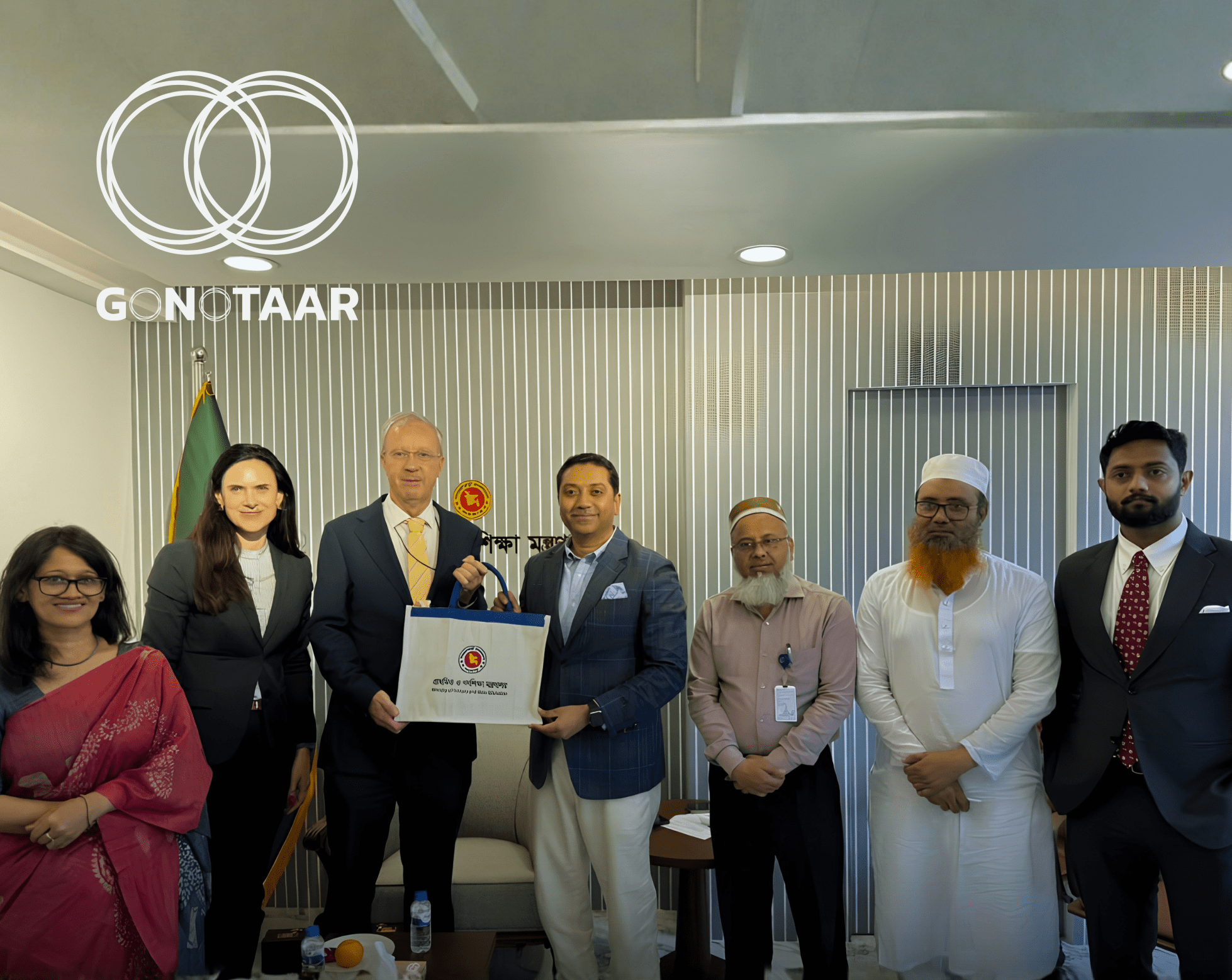
The remarks came during a courtesy meeting at the Secretariat with a high-level delegation led by Junko Takahashi, chief representative of the Japan International Cooperation Agency (JICA) Bangladesh Office.
Speaking at the meeting, the state minister said Japan’s civic education model is widely recognized around the world and could serve as an important reference for Bangladesh.
“Japan’s civic education is globally admired. We want to learn from Japan’s experience to help develop responsibility, discipline, ethics, and civic values among our students,” Hajjaj said.
Major Reforms Planned
The state minister said the government has undertaken extensive initiatives to make Bangladesh’s primary education system more modern, skill-based, and child-friendly.
As part of the reform process, Bangladesh is seeking Japanese cooperation in areas such as:
- Curriculum development
- Teacher training
- Administrative efficiency
- Educational management
- Child-friendly learning environments
Hajjaj noted that work is currently underway to develop a new primary education curriculum.
Focus on Civic Education and Skills Development
According to the minister, the proposed curriculum will place special emphasis on:
- Civic education
- Sports education
- Cultural education
- Mathematics
- Science education
- Creating a challenging and enjoyable learning environment for students in Grades 4 and 5.
“We are working on a new curriculum that will strengthen civic education, sports, culture, mathematics, and science while ensuring a more engaging and enjoyable learning experience for children,” he said.
Plan to Establish Math Labs
The state minister also announced plans to gradually establish Math Labs in primary schools across the country.
Similar to science laboratories, these facilities are expected to make mathematics learning more interactive, technology-based, and attractive for young learners.
“We want to make mathematics education more engaging and technology-driven. Technical assistance, training, and guidance from JICA will be crucial in implementing this initiative,” Hajjaj added.
Reviewing International Education Models
As part of broader structural reforms, Bangladesh is also examining the education administration systems of Japan, Thailand, and Turkey.
The government aims to improve accountability, monitoring mechanisms, performance evaluation, and the overall efficiency of field-level education offices in line with international standards.
JICA Expresses Support
Members of the JICA delegation expressed their willingness to continue supporting Bangladesh’s efforts to improve primary education.
The discussions covered potential cooperation in curriculum development, teacher training, volunteer programs, administrative capacity building, and creating more child-friendly educational environments.
The meeting reflects Bangladesh’s ongoing efforts to modernize its education sector and equip students with the skills and values needed to meet future challenges.