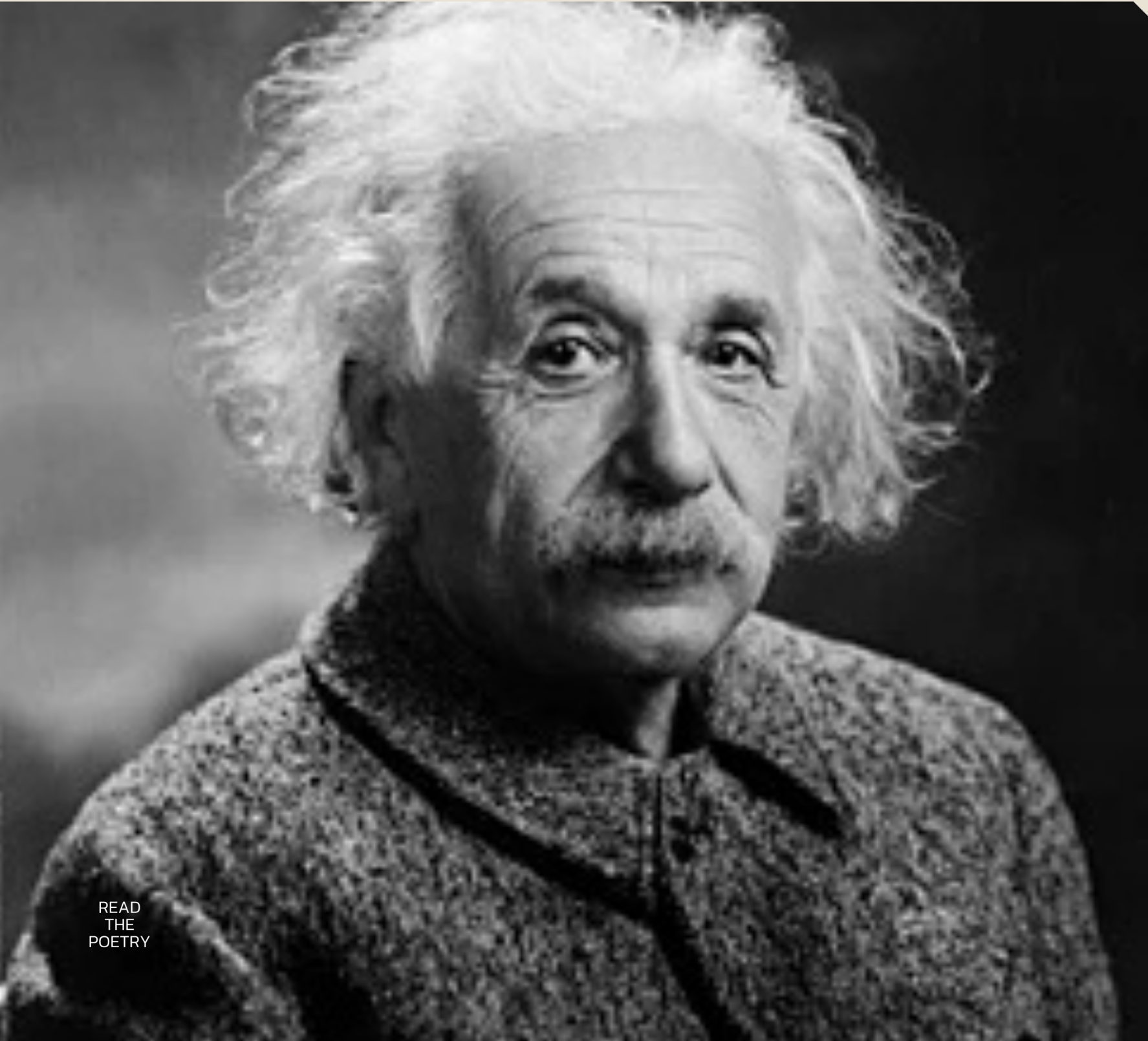
Seventy-one years ago today, the world lost a mind that redefined the very fabric of reality. On April 18, 1955, Albert Einstein passed away in Princeton, New Jersey, leaving behind a scientific legacy that remains the cornerstone of modern physics.
Today, we honor not just a Nobel Prize winner, but a visionary whose curiosity transcended the limits of human imagination.
The Early Spark: A Rebel in the Making
Born in 1879 in Ulm, Germany, Einstein was never the “perfect” student. Legend says he was slow to speak, and he famously detested the rigid, rote learning of the Prussian school system.
His inspiration didn’t come from textbooks, but from a simple pocket compass given to him at age five. The idea that an invisible force could move a needle ignited a lifelong obsession: uncovering the hidden laws of the universe.
1905: The “Annus Mirabilis” (Year of Miracles)
While working as a level-III technical examiner at the Swiss Patent Office, Einstein published four papers that shattered 200 years of physics. In a single year, he:
- Proven the existence of atoms.
- Explained the photoelectric effect (which earned him the Nobel Prize).
- Introduced Special Relativity, proving that time and space are not absolute.
- Derived the world’s most famous equation, linking energy and mass:
$$E = mc^2$$
Redefining Gravity: General Relativity
In 1915, Einstein took it a step further. He realized that gravity isn’t just a “pull” between objects, but a curvature of spacetime caused by mass. Imagine placing a bowling ball on a trampoline; the way it curves the fabric is how Einstein viewed a star warping the universe.
This theory was famously proven during a solar eclipse in 1919, turning Einstein into an overnight global celebrity—a status no scientist had ever achieved before.
A Legacy Beyond the Laboratory
Einstein’s contribution wasn’t limited to the blackboard. He was a deeply “human” genius who used his platform for:
- Civil Rights: He called racism America’s “worst disease” and was a close ally of W.E.B. Du Bois.
- Pacifism: Though his letter to FDR helped kickstart the Manhattan Project out of fear of Nazi Germany, he spent his later years tirelessly campaigning for nuclear disarmament.
- Philosophy: He believed in a “cosmic religious feeling,” a sense of awe at the harmony of nature that transcended dogma.
A Legacy Beyond the Equations
Einstein is most famously known for the world’s most recognized equation, $E=mc^2$, which established the equivalence of mass and energy. However, his contributions spanned far beyond a single formula. His General Theory of Relativity completely overhauled our understanding of gravity, envisioning it not as a mysterious force, but as a curvature in the four-dimensional fabric of space-time.
The Philosopher of Physics
Beyond the chalkboard, Einstein was a vocal advocate for peace, civil rights, and education. He famously believed that “imagination is more important than knowledge,” reminding us that progress requires the courage to question established “truths.”
His death marked the end of an era, but his “Excellency in Science” remains an active, living force. As we look toward the stars or simply use our smartphones, we are participating in the world that Albert Einstein helped us see clearly for the first time.
Albert Einstein didn’t just change how we look at the stars; he changed the very fabric of how we define reality. From a patent clerk with a penchant for daydreaming to the global face of genius, his life remains the ultimate blueprint for intellectual courage.
The word “Einstein” Still Alive
We live in Einstein’s world. Without his theories:
- GPS wouldn’t work (it requires relativistic corrections to stay accurate).
- Lasers and Solar Panels wouldn’t exist (based on his work on light).
- Our understanding of Black Holes and the Big Bang would be non-existent.
“Imagination is more important than knowledge. For knowledge is limited, whereas imagination embraces the entire world.” — Albert Einstein
Einstein taught us that to solve the hardest problems, we don’t just need more data—we need the courage to question the “obvious.” He remains the eternal symbol of the power of a single mind to move the world.