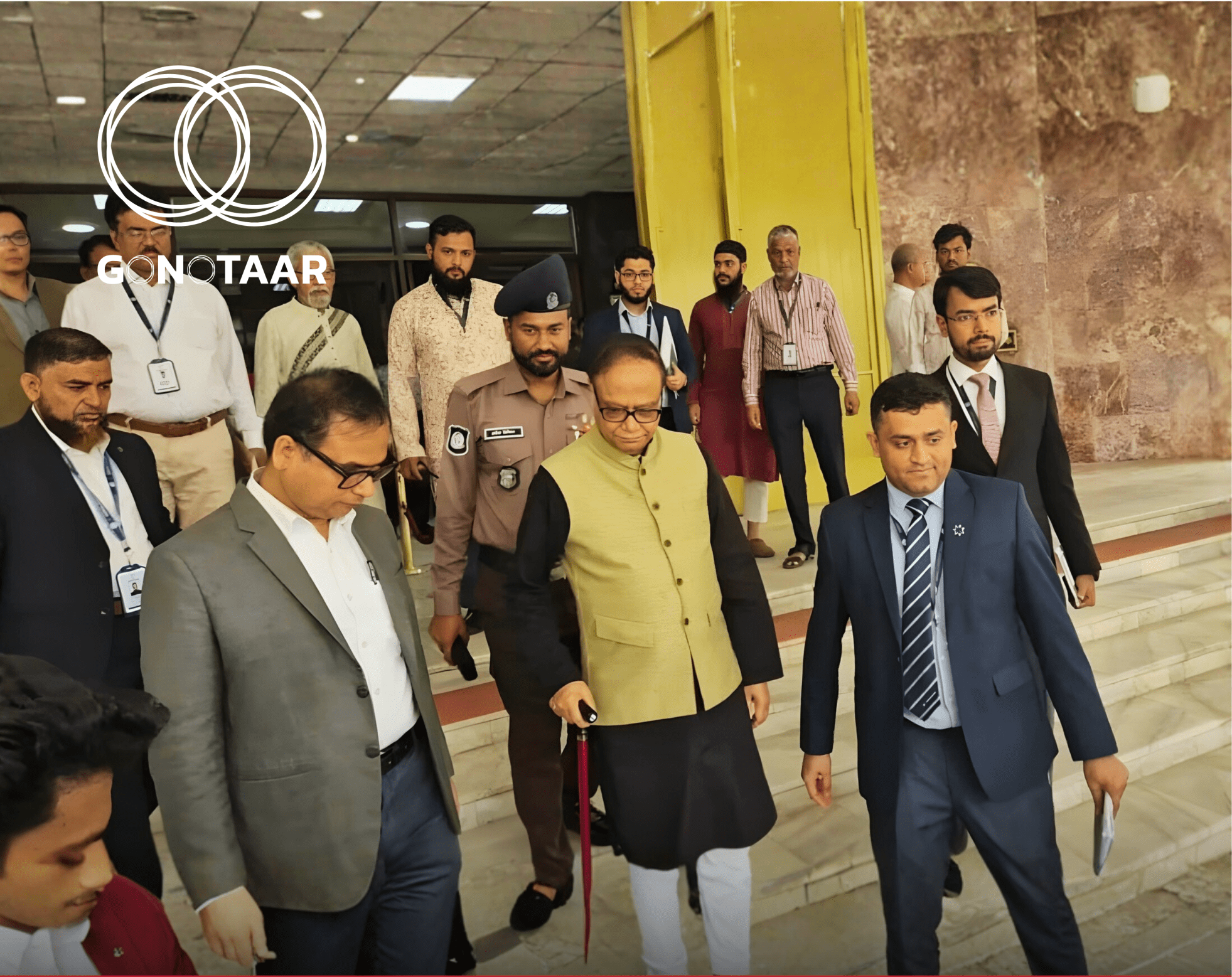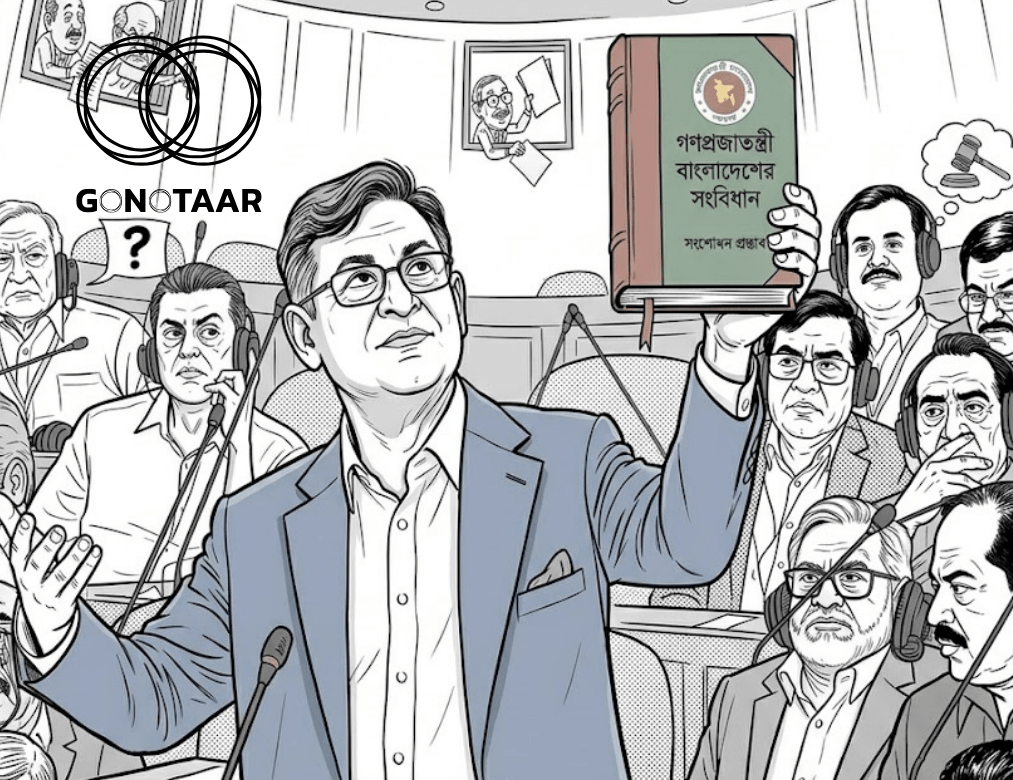
Home Minister Salahuddin Ahmed stated on Sunday that a constitution is never “reformed”; rather, it is repealed, suspended, or amended. He made these remarks during a discussion in the National Parliament regarding the proposed July National Charter and constitutional amendments.
During his speech, the Home Minister proposed the formation of a “Special Parliamentary Committee” comprising all political parties to oversee the constitutional amendment process.
Honoring the July Uprising
The Home Minister emphasized the government’s commitment to honoring the intent of the July student-led mass uprising. He pledged to incorporate the essence of the 2024 July National Charter and the July Declaration into the Constitution by including them in the Fourth Schedule. However, he noted that the independence of 1971 remains incomparable to any other event.
Addressing ‘Legislative Fraud’
Salahuddin Ahmed criticized the 15th Amendment, describing many of its provisions as “legislative fraud.” He noted that the High Court has already declared parts of it unconstitutional, asserting that the sovereign Parliament will decide on the cancellation or amendment of the remaining sections.
He specifically called for the removal of what he described as “distorted history” and “so-called declarations of independence” imposed through Schedules 5, 6, and 7.
Restoring Historical Accuracy
The Home Minister touched upon historical narratives, stating that Shaheed President Ziaur Rahman declared independence on March 26 and acted as the Provisional Head of State from Kalurghat on March 27. He expressed the government’s intent to restore this history within the constitutional framework.
Regarding the fundamental principles of the state, the Home Minister voiced the government’s determination to reinstate “Absolute Trust and Faith in Almighty Allah.” He noted that while some parties objected to its inclusion in the July Charter, the government remains committed to its restoration as originally introduced by Shaheed President Ziaur Rahman.
Parliamentary Supremacy and Structural Changes
Reaffirming that the people are the owners of all state power exercised through Parliament, Salahuddin Ahmed mentioned the government’s mandate to establish a 100-member Upper House. Under this plan, political parties would hold seats based on proportional representation.
Closing his address, the Home Minister invited treasury bench members, the opposition, and independent MPs to collaborate within the special parliamentary committee. He asserted that the method of constitutional amendment must be determined within the Parliament and not through “imported prescriptions” from external sources.