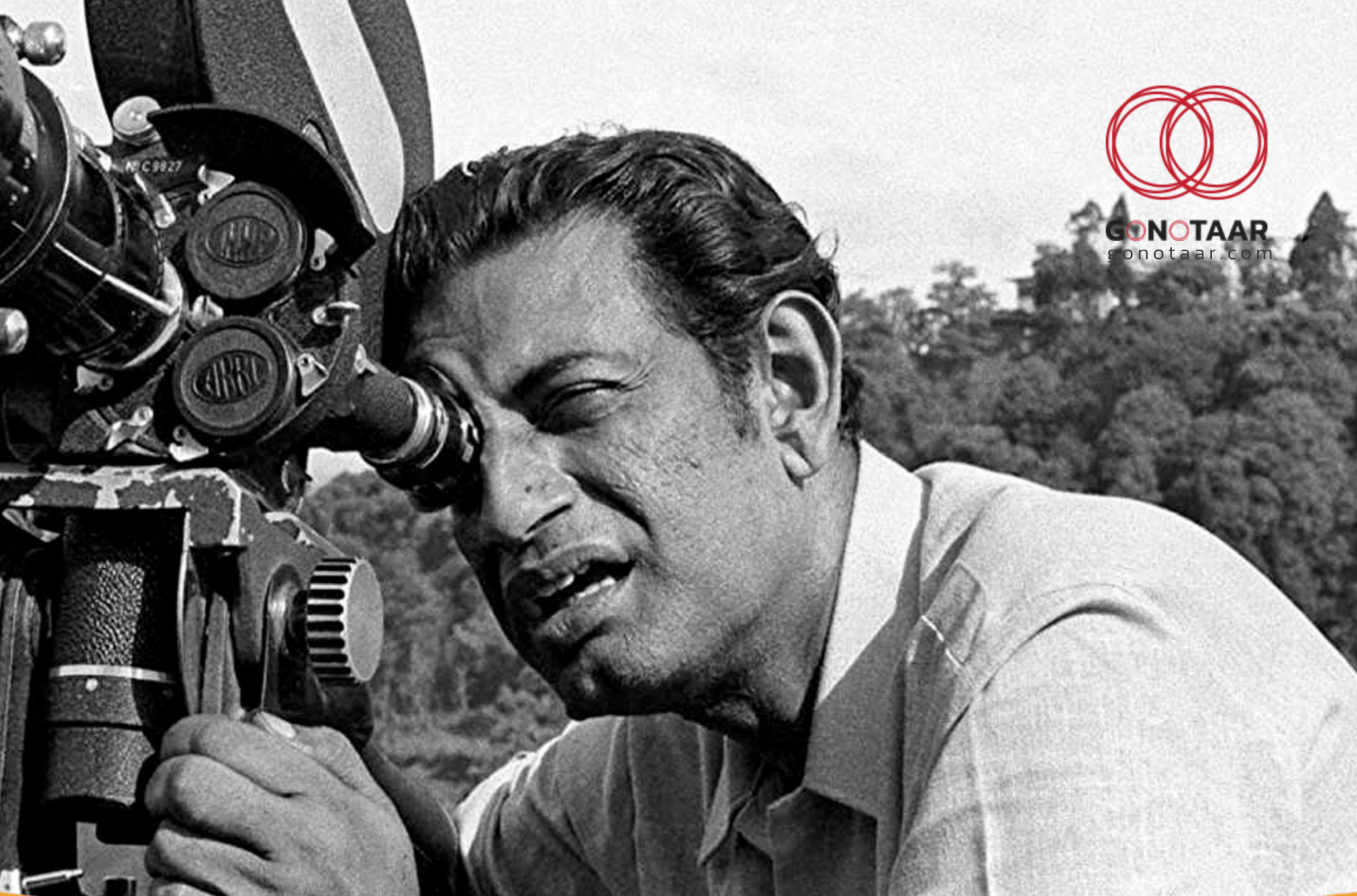
Today, we honor the birth anniversary of a titan of world cinema, a master storyteller, and a true Renaissance man: Satyajit Ray. Born on May 2, 1921, Ray didn’t just make films; he crafted windows into the human soul, framed with a poetic realism that forever changed the landscape of Indian and global art.
From the lyrical struggle of the Apu Trilogy to the sharp intelligence of Feluda, Ray’s body of work remains a masterclass in economy, empathy, and visual rhythm.
Why the “Ray Style” Still Defines Excellence
Ray was more than a director. He was a calligrapher, a music composer, an illustrator, and a writer. His approach to cinema was holistic:
- Humanism at the Core: He had an uncanny ability to find the extraordinary in the ordinary, making the local universal.
- The Complete Auteur: He famously designed his own sets, composed his own scores (beginning with Teen Kanya), and even created his own typefaces like Ray Roman.
- Visual Poetry: His shots weren’t just “beautiful”—they were precise. Every frame was sketched in his famous “Khero Khata” (storyboard notebooks) before a single camera rolled.
“Not to have seen the cinema of Ray means existing in the world without seeing the sun or the moon.” — Akira Kurosawa
5 Essential Masterpieces to Revisit Today
If you want to understand the depth of his genius, start here:
| Film | Year | Significance |
| Pather Panchali | 1955 | The debut that put Indian cinema on the world map. |
| Charulata | 1964 | Widely considered his most perfect technical work. |
| Nayak | 1966 | A psychological deep-dive into the price of stardom. |
| Goopy Gyne Bagha Byne | 1969 | A whimsical, musical masterpiece of fantasy and satire. |
| Shatranj Ke Khilari | 1977 | His first Hindi feature, a sharp look at colonialism and apathy. |
The Legacy Lives On
Decades after he received his Honorary Oscar from a hospital bed in Kolkata, Ray’s influence ripples through the works of modern greats like Martin Scorsese, Wes Anderson, and Hirokazu Kore-eda.
He taught us that to be truly “international,” one must first be deeply rooted in their own soil. Today, we don’t just remember a filmmaker; we celebrate the “Manik-da” who taught us how to see.
Rest in peace, Maestro. The camera continues to roll in your honor.