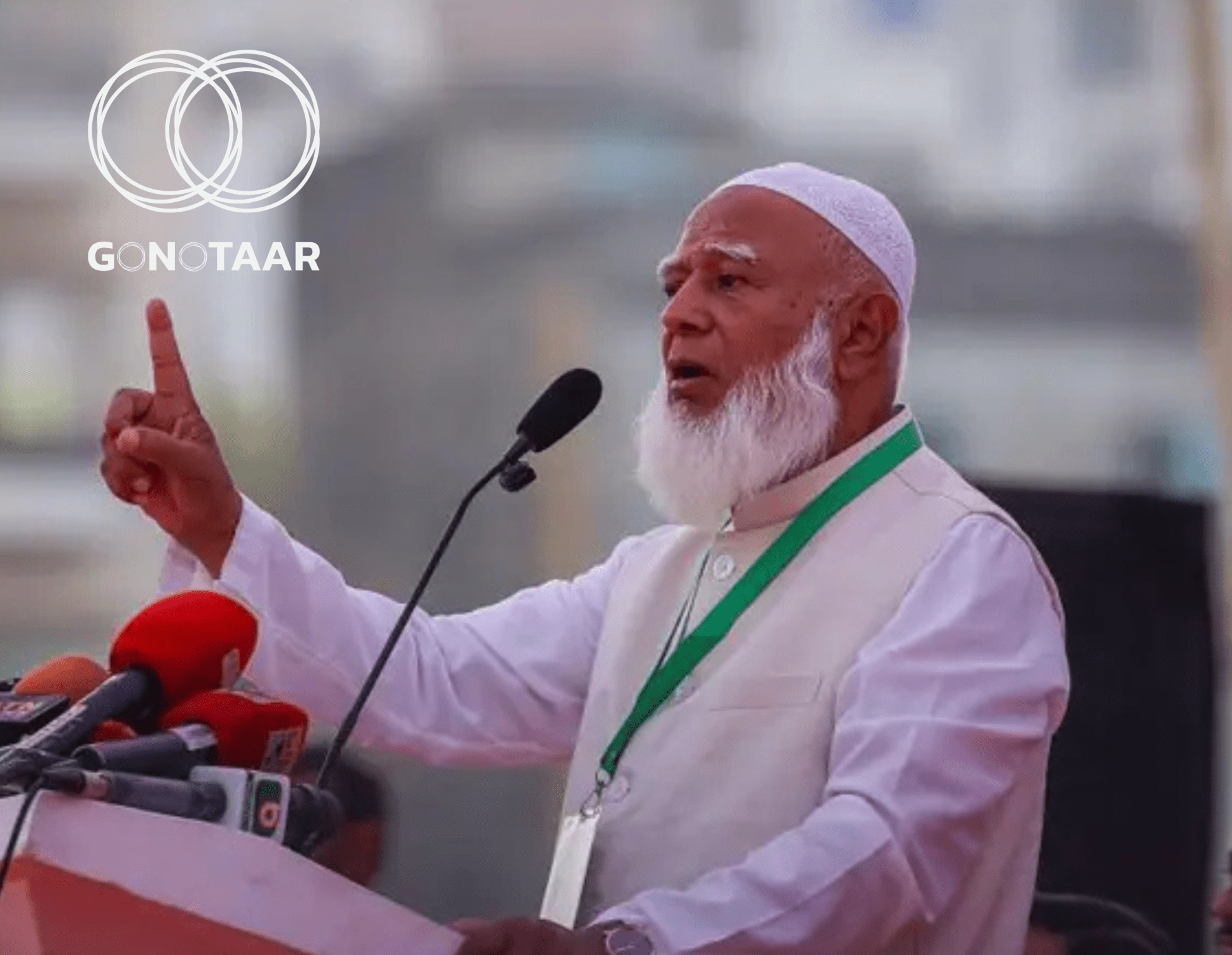
Shafiqul Alam, the bureau chief of the international news agency AFP, was the first to report the news of Sheikh Hasina’s resignation and escape on August 5 last year. News of Sheikh Hasina’s resignation spread before noon that day. At first, some thought it was a rumor. But at noon, the television screen flashed that the army chief would address the nation. At that time, people were pretty sure that something big had happened! At that very moment, AFP confirmed that Sheikh Hasina had fled in a mass uprising.
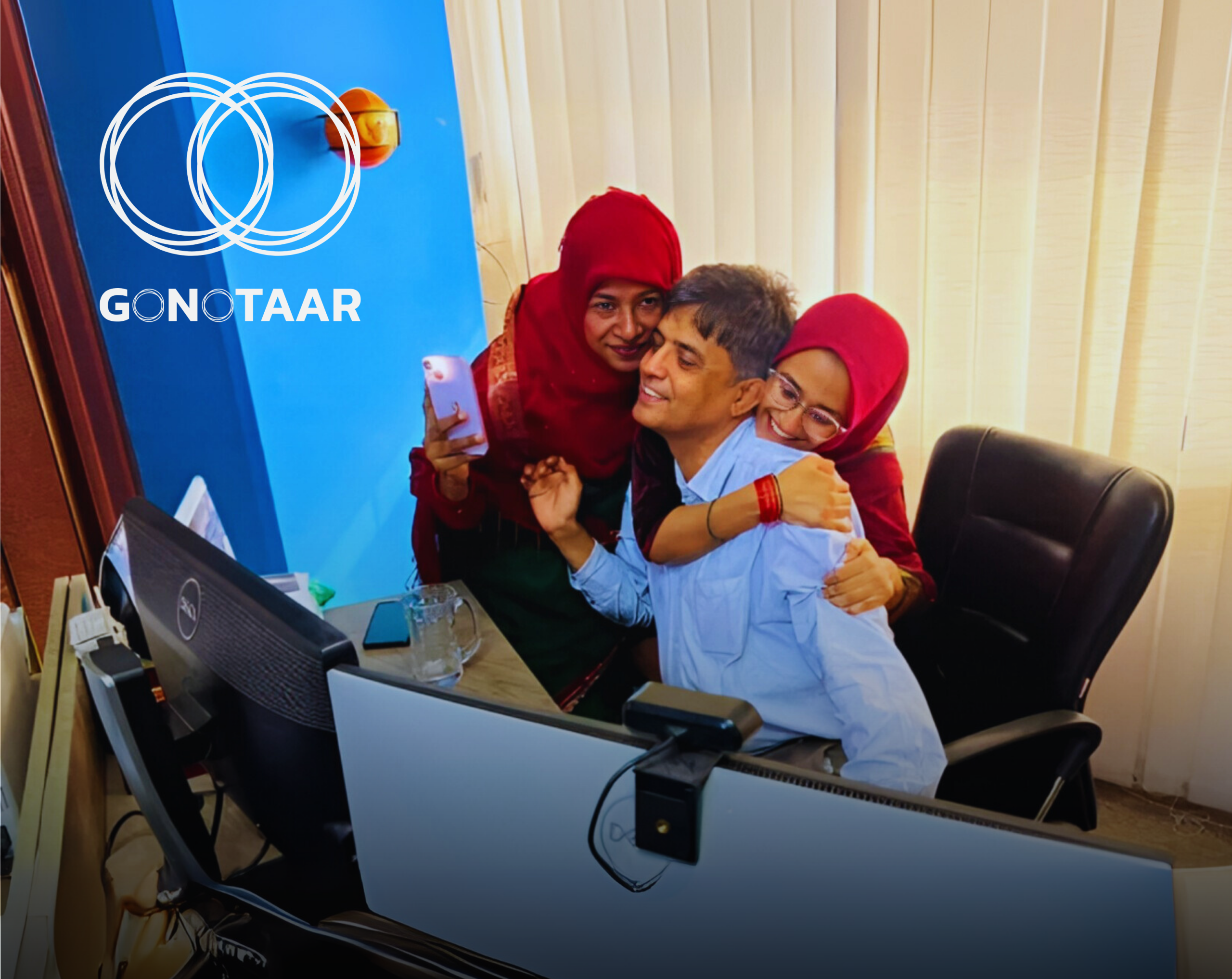
Shafiqul Alam’s family went to the AFP office to welcome him that day. Shafiqul Alam, who is currently the press secretary to the chief advisor, shared some photos from that time on the anniversary of the August 5 mass uprising.
Sharing some pictures of the happy moments with his wife and children, the press secretary wrote, ‘A moment of triumph. When I was working at the AFP Dhaka bureau, my family came to hug me. That day, I broke the news that Sheikh Hasina had fled the country to India. Allah has given me everything. Alhamdulillah.’ The news of that day was immediately followed by a public outcry. The student crowd erupted in joy. Later, Shafiqul Alam told the story of that day in a Facebook post, ‘I can proudly say that I was the first to break the news that Sheikh Hasina had fled the country. A month ago, at around 2 pm, my sources told me that our 15-year-old dictator wanted to record a speech to the nation, but his security officers told him that he did not have time to record another false and propagandistic speech. They took him and his sister to the old airport in Tejgaon, where they boarded a military helicopter and fled the country.’
The press secretary wrote about the experience that day, ‘The news was simple. The headline was simple too: “Bangladesh PM flees country after mass uprising.” But the problem was credibility. Anonymous sources are very risky in a news organization. If your source misleads you by lying, your career can be destroyed in an instant. And the reputation of the news organization can be ruined forever. So I was worried that the AFP South Asia editor, who has written a wonderful book about cricket on Mount Kilimanjaro, would take such a big risk.
But he took it at face value. He knew that my reputation at AFP had never been in question in the last 20 years. He asked me, Was my source a high-ranking official? I said yes. I even sent him the name and title of my source, on condition that AFP would not reveal his identity in the news. He asked me if I had complete confidence in my source. I said yes again. The next moment, he sent a “Red Lettered Global Alert” to Hong Kong, and the one-sentence story was published immediately.