Dhaka and several other cities across Bangladesh have been gripped by a sudden wave of coordinated violence over the past 48 hours, as a banned political outfit linked to the Awami League (AL) announced a controversial “Dhaka Lockdown” programme aimed at destabilising the interim administration.
From crude bomb explosions in the capital’s dense neighbourhoods to buses being set ablaze in broad daylight, the scale and spread of attacks have forced security agencies to impose a city-wide high alert, with intelligence units describing the situation as “unprecedented since July.”
Wave of Crude Bomb Attacks
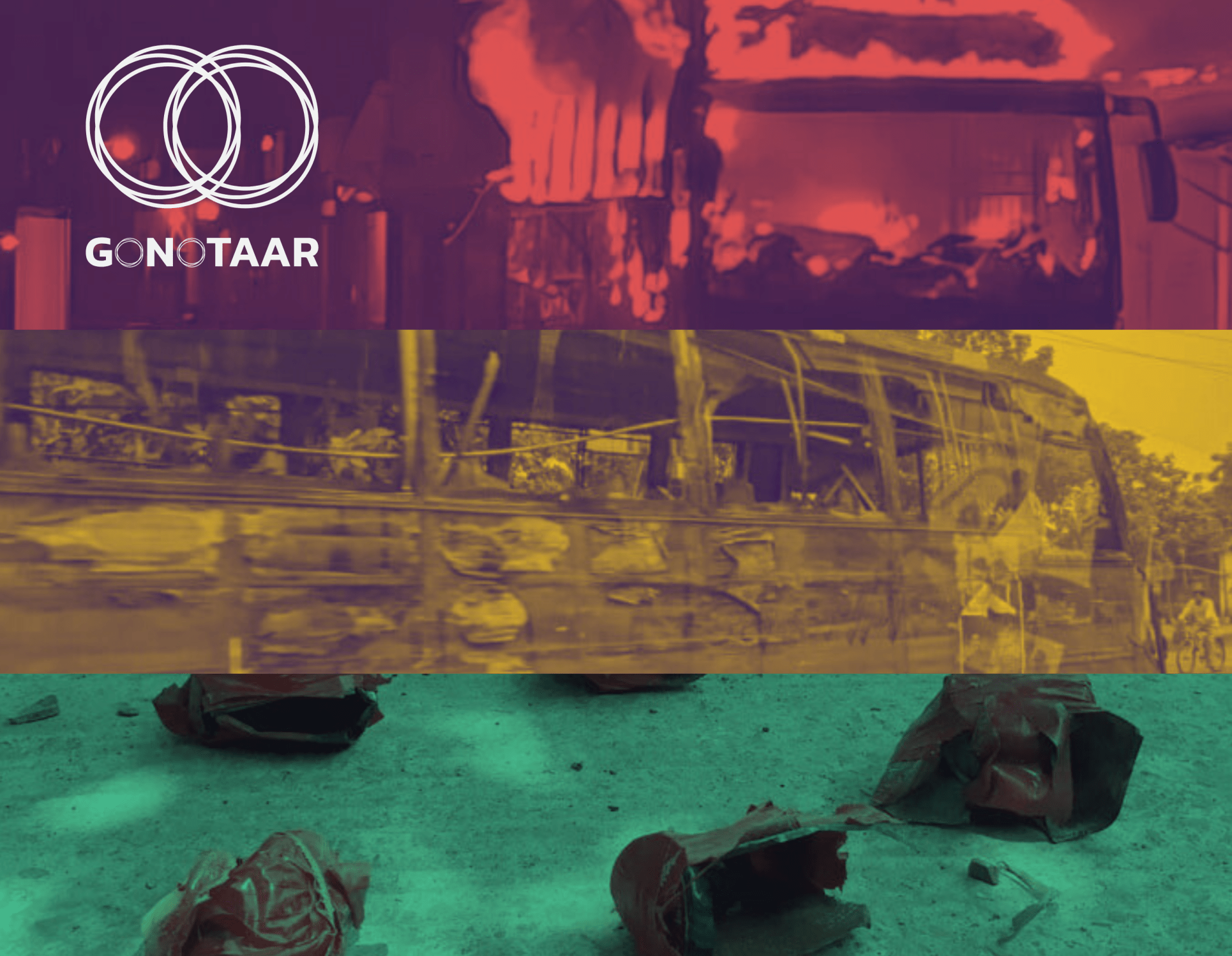
Multiple crude bomb explosions—known locally as “cocktail blasts”—rocked Dhaka throughout Monday and Tuesday. The first explosion was reported around 3:45 AM in front of Grameen Bank headquarters in Mirpur, where two unidentified men on a motorbike reportedly hurled explosives before fleeing the scene.
Similar blasts followed in Shahbagh, Malibagh, Mouchak, and Jatrabari, rattling nearby residents and paralyzing late-night traffic. The Dhaka Metropolitan Police (DMP) confirmed that improvised explosive devices were used in at least 11 separate incidents within a 24-hour span.
A senior DMP officer told Gonotaar on condition of anonymity that the pattern of the attacks indicates “a coordinated effort rather than isolated mischief,” adding that several suspects linked to AL’s student wing, the Bangladesh Chhatra League (BCL), were already under surveillance prior to the blasts.
Buses Torched in Rapid Succession
Public transport again became the primary target. Around 5:40 AM Tuesday, miscreants set fire to a Victor Paribahan bus in Shahjadpur, followed by another arson attack just half an hour later on an Akash Paribahan bus in Merul Badda.
Later in the evening, a third bus was set ablaze near Dhanmondi-27, adjacent to a busy hospital area. No passengers were reported inside at the time, though nearby vehicles sustained damage.
Outside Dhaka, in Mymensingh, a parked passenger bus was torched late Monday night. The driver died on the spot, and a woman with her young son suffered critical burns. Authorities described the incident as “terror-motivated” and similar in execution to recent Dhaka attacks.
Authorities on High Alert
In response, the DMP has divided the capital into 54 security zones, deploying additional patrols and intelligence units. Key government offices, media houses, and religious sites have been placed under heightened security, while temporary restrictions have been imposed on public gatherings near strategic installations.
Home Minister (Acting) Shamsul Kabir briefed reporters late Tuesday, stating that the “government is treating the violence as politically motivated sabotage.” He confirmed that 34 individuals, including known Awami League operatives, were detained for interrogation.
Meanwhile, elite Rapid Action Battalion (RAB) units have begun overnight raids in several suspected hideouts, including Mirpur, Tejgaon, and Khilgaon, to trace the source of the explosives used.
Political Context: ‘Lockdown’ Call Raises Alarm
The violence coincides with the banned Awami League’s public call for a “Dhaka Lockdown” on November 13, allegedly to protest what it termed “political exclusion” under the interim government.
Analysts say the timing of the explosions and arson suggests a pre-emptive attempt to create unrest ahead of that programme. Political observers note that such tactics mirror earlier strategies used during the 2014-15 unrest, when AL’s opponents were accused of orchestrating nationwide transport sabotage to destabilise governance.
Security experts warn that unless the ongoing violence is contained immediately, Dhaka could face “a spiralling situation” that disrupts commerce, transport, and essential services in the coming days.
Human Toll and Fear Among Citizens
Although the overall death toll remains limited—one confirmed in Mymensingh and another shooting victim in Dhaka—the psychological impact is profound. Commuters now avoid night travel, bus drivers are refusing late routes, and businesses are closing earlier than usual.
A shopkeeper from Malibagh told Gonotaar, “We’re hearing blasts every few hours. The fear feels like it did before the Uprising—no one knows which side is fighting which anymore.”
Fire Service officials confirmed responding to seven separate calls related to arson and explosions since Monday. “Our teams are exhausted,” said a fire officer stationed in Dhanmondi. “These fires are clearly not accidents—they’re timed and targeted.”