

By Md. Jabed Nur Shantaw
Founder, Climate Justice Bangladesh
The geopolitical significance of Bengal is nothing new. From the reign of the Nanda kings to the rise of the Pala Empire, this region flourished as a center of trade, culture, and politics. Its importance only grew during the European colonial period, particularly as strategic competition across South and Southeast Asia intensified around the Bay of Bengal. During the Second World War, this region became a battleground between the Allied forces and Japan, underscoring the crucial geographic position of present-day Bangladesh. Even after independence, this significance has not diminished; rather, the pressures of new geopolitical realities have only deepened.
Political parties promise service to the people when in power, yet behind these promises lies the hard reality of geopolitical pressures. The influence of foreign interests increasingly threatens to weaken the state from within.
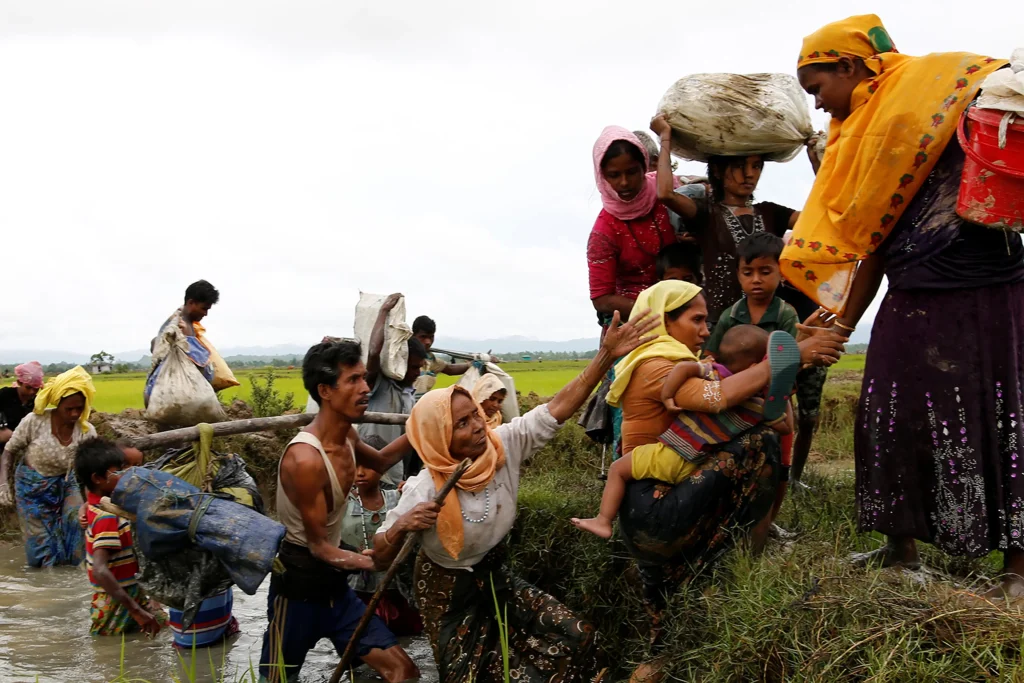
The Rohingya Crisis and Myanmar’s Geopolitical Strategy
Today nearly 1.2 to 1.3 million Rohingya have taken refuge in Bangladesh. This is not merely a humanitarian crisis but a calculated geopolitical move. Myanmar first expelled the Rohingya from its own territory, then exploited international indifference to shift the burden onto Bangladesh.
The refugee camps in Cox’s Bazar and Teknaf have disrupted the local economy and employment patterns. International agencies and NGOs are providing jobs for refugees while local communities fall behind. Frustration is rising along the border, setting the stage for potential long-term instability.
Compounding this is the silent invasion of yaba. Millions of these methamphetamine pills cross daily from Myanmar into Bangladesh. This invisible crisis is damaging youth, spreading corruption along the border, and weakening the state from within. International powers quietly benefit from this instability, ensuring that Bangladesh remains vulnerable and controllable.
BIG-B: The Shadow of Colonial Influence
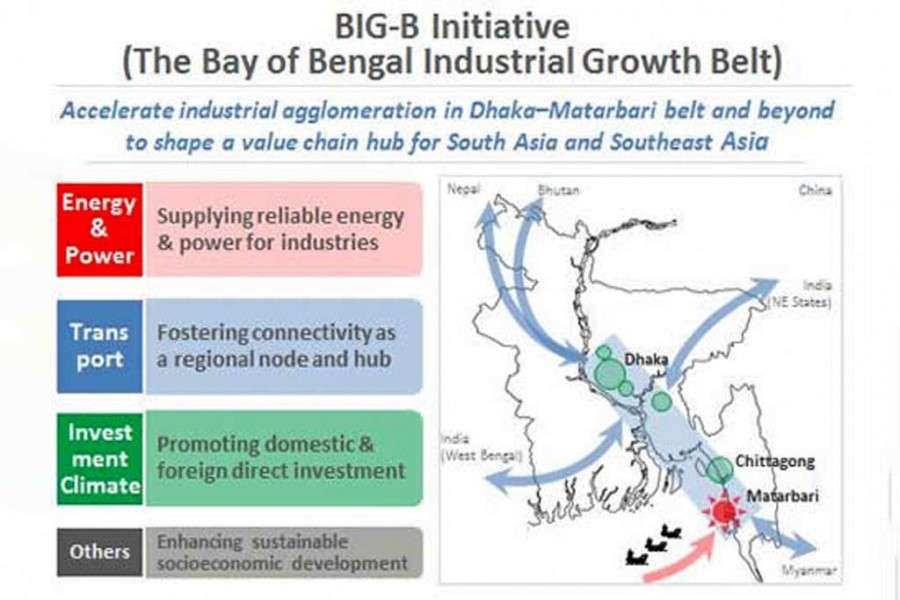
The government portrays Japan’s Bay of Bengal Industrial Growth Belt (BIG-B) initiative as a symbol of development. Yet behind the rhetoric lies a model of infrastructural diplomacy where debt, technology, and project management remain firmly in foreign hands.
Japan’s role bears historical echoes of British colonialism. As the British Raj expanded under the patronage of the East India Company, Japan now exerts similar influence through the BIG-B initiative. JICA, Japan’s development agency, resembles the administrative machinery of a bygone colonial era, with Tokyo as its new power center.
Moreover, Japan is not acting alone. It partners with India to secure strategic control over the Bay of Bengal and northeastern India, using Bangladesh as a corridor. This turns Bangladesh’s geographic significance into a competitive arena for foreign powers.
In Matarbari, Rampal, and special economic zones, local people are losing land while natural resources suffer. Displacement and environmental destruction under the banner of development have reached the level of human rights concerns. BIG-B projects are locking Bangladesh into long-term cycles of debt and dependence, weakening economic sovereignty while expanding external influence over politics and diplomacy.
The Geopolitical Triangle and Internal Divisions
Bangladesh’s present geopolitical reality can be described as a triangle: the Rohingya crisis on one side, the silent flow of yaba on another, and Japan’s BIG-B projects forming the third corner.
These may appear unrelated, but together they create a deliberate geopolitical framework aimed at weakening the country over time.
The Rohingya crisis undermines geographic and social security as camps swell, jobs shrink for locals, and social divisions deepen. The drug trade silently damages youth, spreads crime, and erodes law and order. Meanwhile, BIG-B projects displace people, destroy rivers, forests, coastlines, and farmland, and sever communities from their ancestral lands.
This triangle consolidates foreign influence, erodes social cohesion, exploits natural resources, and leaves the state increasingly dependent on external actors. As divisions between people and nature grow, so too does internal discord.

The Urgent Need for Constitutional Reform
Bangladesh’s constitution still carries the shadow of colonial legacies. Governance structures remain shaped by external interests rather than national priorities. As a result, the state often protects foreign agendas over domestic welfare.
Constitutional reform is therefore no longer a political demand alone; it has become a necessity for survival. A sovereign state cannot remain truly independent if its economy and diplomacy are tied to foreign control.
Bangladesh is now caught in a complex geopolitical game where the refugee crisis, border instability, loan-driven development, and regional power rivalries converge. To escape this trap, the constitution must be reshaped to prioritize national sovereignty, resource protection, and the collective interests of the people above all else.
The Perils of Political Division
Political parties in Bangladesh treat each other not as competitors but as enemies. This short-sightedness repeatedly invites foreign intervention, deepening external influence. Once in power, ruling parties prioritize partisan interests over national ones, fueling perpetual instability where citizens, the economy, and sovereignty all suffer.
History Repeating Itself
During the Second World War, Cox’s Bazar became a strategic center for Allied, Japanese, and British forces vying for control over the Bay of Bengal.
Today Cox’s Bazar retains the same significance, though the battles have changed. There are no tanks or fighter planes; instead, there are Rohingya refugees, narcotics trafficking, and debt-driven megaprojects.
History teaches that nations failing to protect their own interests become pawns in geopolitical games. Unless Bangladesh acts now, Cox’s Bazar and the Bay of Bengal may again become arenas for global power rivalries, turning the blessings of geography into the burdens of history.


Bangladesh’s geopolitical position in the Bay of Bengal is deeply connected not only to regional security and climate diplomacy, but also to gender justice. In this evolving strategic landscape, women must be recognized as essential actors — not passive beneficiaries.
From coastal resilience to blue economy leadership, women’s participation can reshape how Bangladesh responds to climate risks, displacement, and resource governance in the Bay. Inclusive policies that amplify women’s voices in decision-making, maritime governance, and community adaptation will ensure that our geopolitical strategies are both sustainable and just. Without gender-responsive approaches, the true potential of the Bay of Bengal region will remain incomplete.