
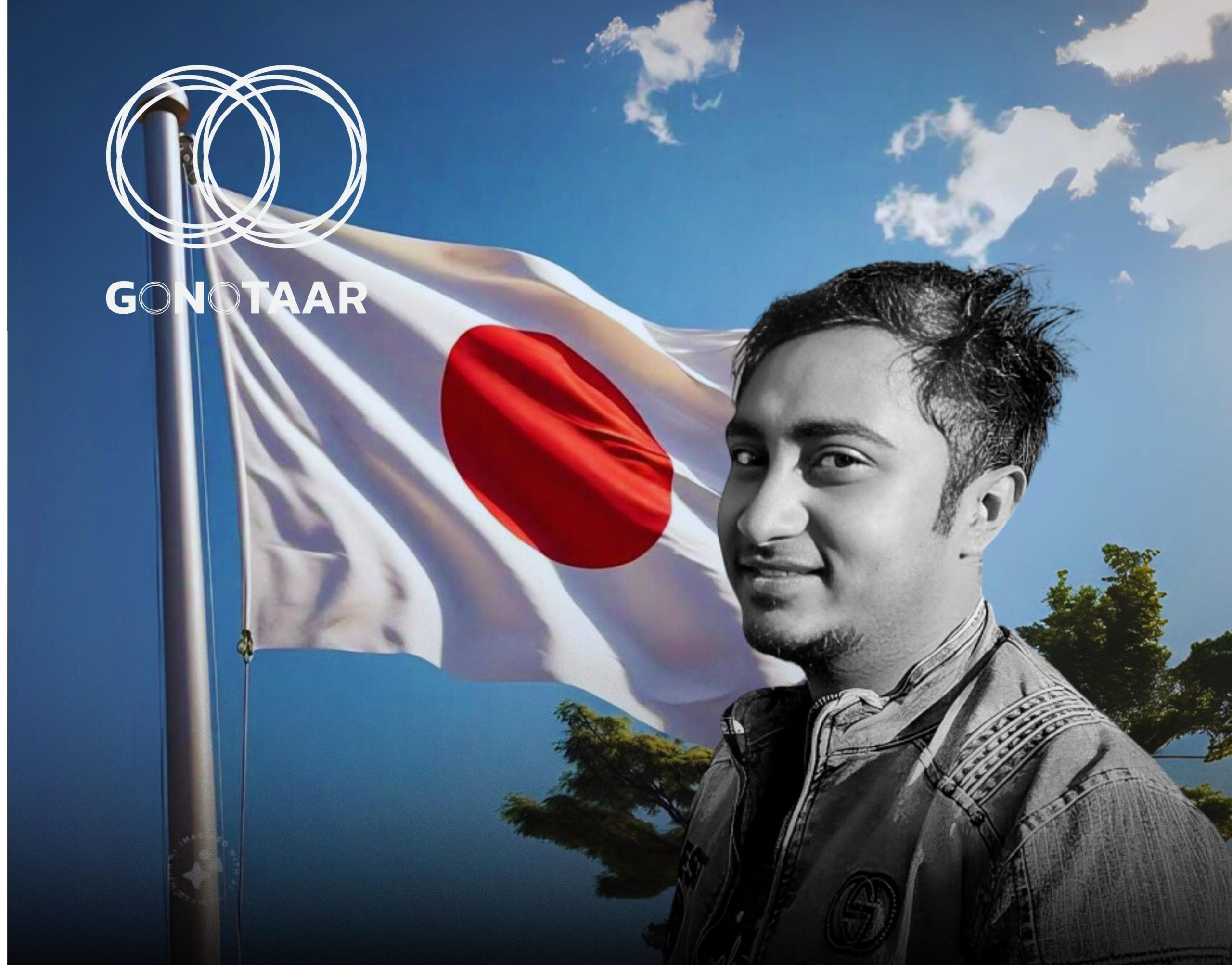
The lifeless body of Mohammad Afriji Bin Apon, a 26-year-old Bangladeshi youth, returned home in a coffin wrapped in a white shroud — a devastating end to a dream that once carried him across the sea to Japan with hopes of becoming an automobile engineer.
Afriji had been living in a small rented apartment in a bustling Japanese city, struggling silently through extreme hardship. His ordeal reportedly began when he was unable to pay his college tuition fees. Financial crisis led to the systematic disconnection of his essential services — electricity, gas, water, and even mobile communication. Isolated and cut off, Afriji was effectively imprisoned in his own apartment.
According to close friends and family, Afriji had been battling severe depression since December of last year. Though some around him were aware of his deteriorating mental state, no help reached him in time.
In a Facebook post, Bangladeshi community member Hasan Robin shared heartbreaking details. Afriji’s neighbors said they hadn’t seen him for over two weeks. While some had left food at his door, the packages remained untouched — a sign that Afriji no longer had the strength to even open the door.
He was last seen through a narrow kitchen window, using his phone’s flashlight and telling friends that he could no longer see properly. He also confided that he hadn’t eaten in four days.
Under Japanese law, breaking into someone’s home without official permission is illegal. Friends had therefore decided to call police, fire service, and an ambulance to intervene the following Sunday. But time ran out.
Afriji died alone, in silence, consumed by hunger and despair.
“When the police finally entered the apartment and removed his body, it looked like he weighed less than 10 kilograms,” wrote Hasan Robin. “His entire body had stiffened — a painful image I never imagined I’d witness.”
Afriji’s death sheds light on the grim reality many foreign students and workers face in developed nations — trapped between legal systems, financial hardship, and social invisibility.
His story is a painful reminder: behind each migration story lies a human being, often unseen, unheard — until it’s too late.


