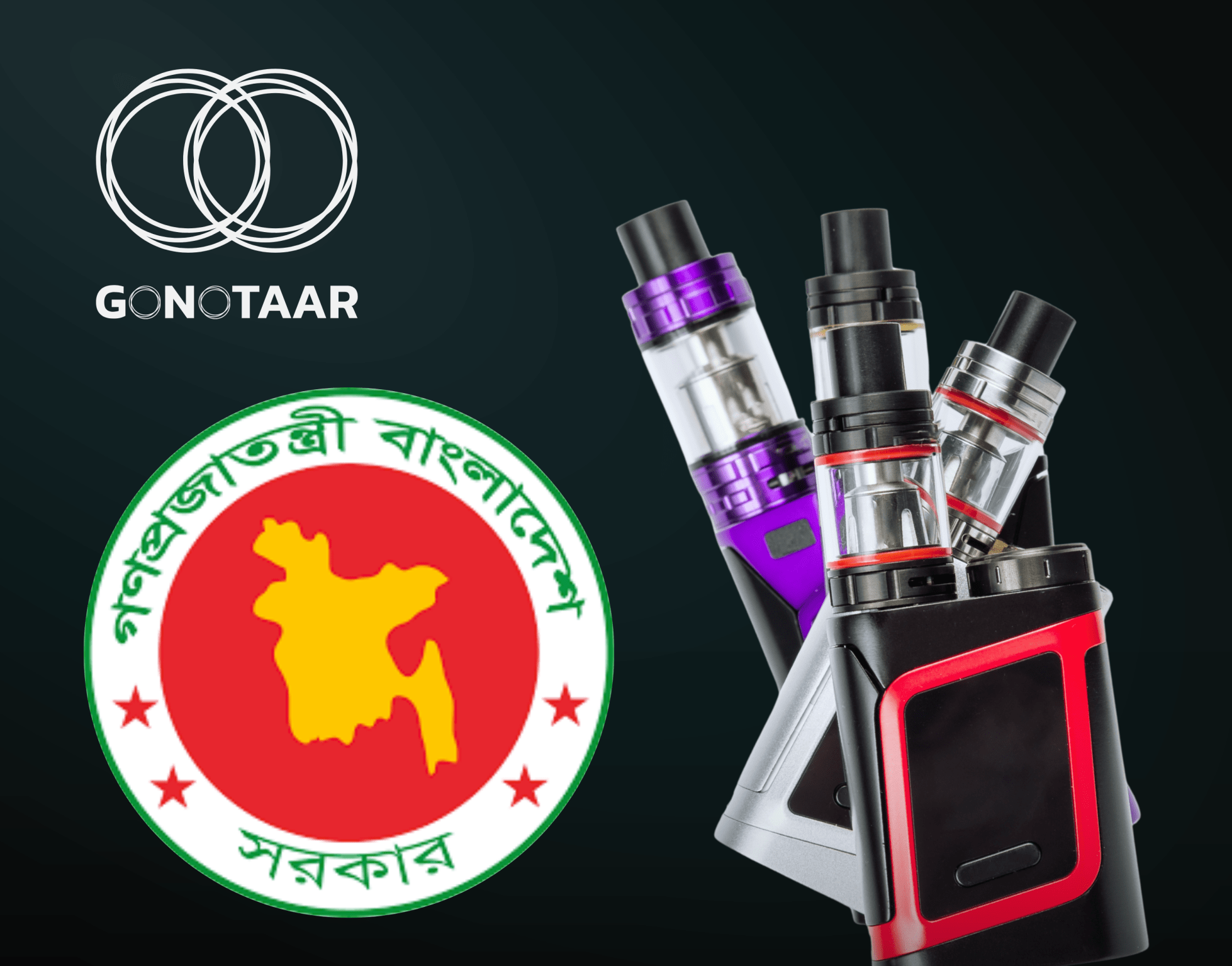
The government is planning to revoke the ban on the production and sale of e-cigarettes in Bangladesh by amending the Tobacco Control Ordinance. Sources say the changes are based on recommendations from a parliamentary special committee reviewing 133 ordinances issued during the caretaker government. Following these recommendations, the Health Ministry is preparing a draft that removes the relevant restrictions, which will soon be sent to the Legislative and Parliamentary Affairs Division.
The Bangladesh Electronic Nicotine Delivery System Traders Association (BENDSTA) recently stated that globally, e-cigarettes or electronic nicotine delivery systems (ENDS), also known as vapes, are recognized as a harm-reduction method for tobacco. According to the UK’s Smoking and Tobacco: Applying All Our Health guidelines (July 4, 2025), smoking is considered a dependence requiring medical support rather than a lifestyle choice. The National Health Service (NHS) emphasizes helping smokers quit as a major public health priority.
The guidelines specifically highlight e-cigarettes as the most widely used smoking cessation aid, citing growing scientific evidence of their effectiveness. A Cochrane systematic review shows that nicotine-containing e-cigarettes are nearly twice as effective as traditional nicotine replacement therapies like patches or gum in helping smokers quit.
BENDSTA leaders say the government’s move is a timely and realistic step from outright prohibition to policy-based regulation.
BENDSTA President Suman Zaman added:
“Young people have not stopped using e-cigarettes; instead, they are accessing these products illegally. With proper laws and monitoring, the government can generate significant revenue from this sector.”
He further explained:
“The best way to protect young people is through effective, targeted regulation, not a ban. Proper age verification, licensed sales, advertising restrictions, and strict monitoring can effectively prevent underage access. A total ban pushes the market underground, creating an unregulated black market where products easily reach young people. In this reality, a controlled framework is far more effective and sustainable for public health and youth safety.”