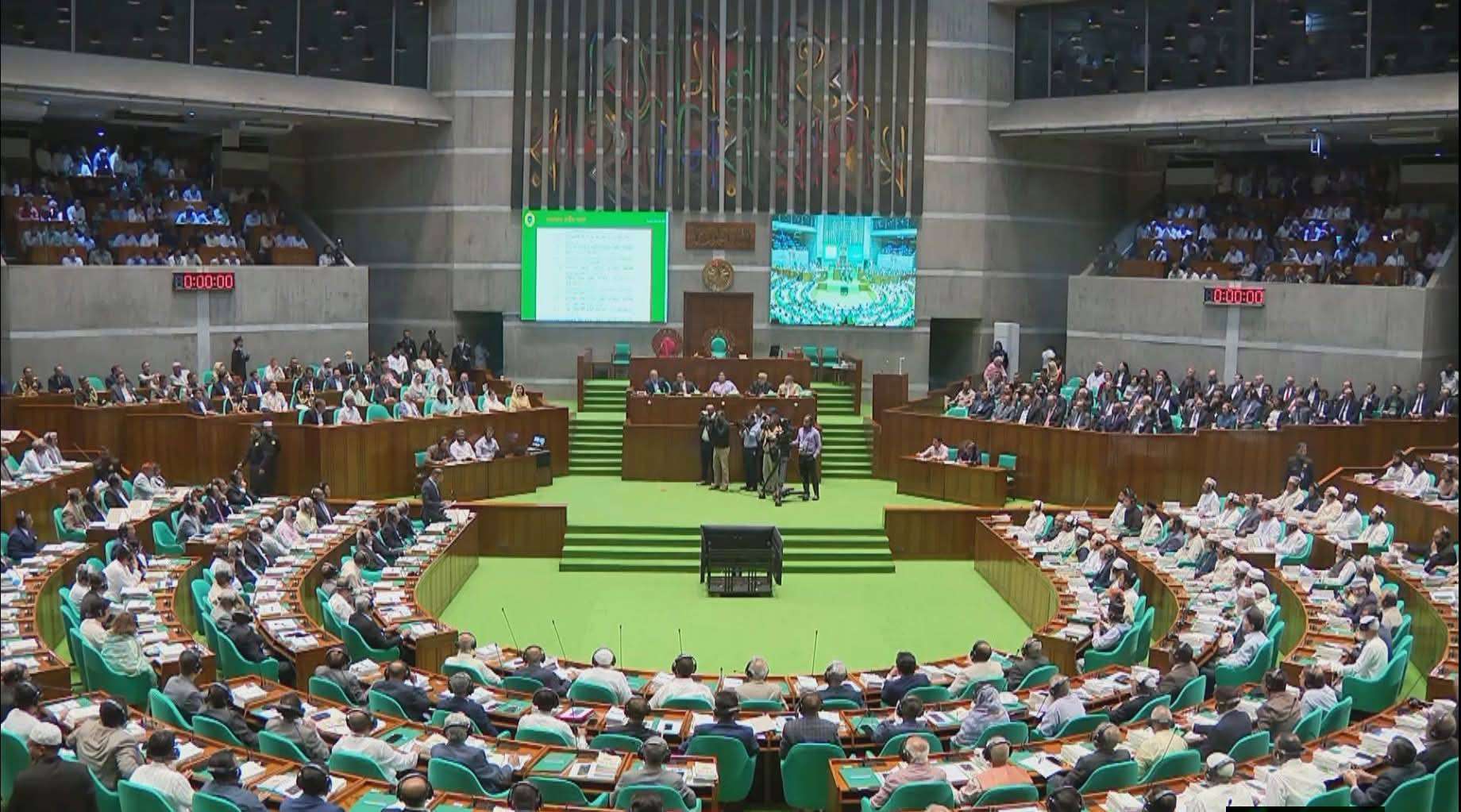
On Thursday, the 13th National Parliament began its journey amid a historic transformation. The election of a new Speaker and a dramatic walkout by opposition parties highlighted a new chapter in Bangladesh’s parliamentary democracy.
A Wave of New Faces
This parliament reflects a major change, with 76% of members being newcomers. Out of 296 elected MPs, 227 are serving in parliament for the first time. Even top political leaders are part of this fresh batch—Prime Minister Tarek Rahman, opposition leader Dr. Shafiqul Rahman, and leaders from the Gonosanghati Andolon, Gono Odhikar Parishad, and NCP are all first-time parliamentarians.
In his speech, Prime Minister Tarek Rahman expressed determination to end past parliamentary stagnation:
“The ousted fascist government had rendered this great parliament ineffective. We aim to make this parliament the core platform for national debates and solutions.”
President’s Speech and Opposition Walkout
The session grew tense when President Mohammed Shahabuddin began his speech. Opposition parties, including Jamaat-e-Islami and members of the 11-party alliance, staged a walkout from the chamber.
Outside the parliament, Jamaat Ameer Dr. Shafiqul Rahman told reporters:
“We requested the government and the Speaker not to allow him to deliver his speech. When our demand was ignored, we protested by walking out.”
Earlier, NCP spokesperson Asif Mahmud Sajib Bhuiya had called for the impeachment of the president, and opposition deputy leader Syed Abdullah Mohammad Taher had labeled the president a ‘collaborator of a dictatorial regime’, signaling their intention to boycott.
Empty Chair and New Speaker
For the first time since the restoration of parliamentary democracy in 1991, the Speaker’s chair was left vacant at the start of the session.
- Former Speaker Shirin Sharmin Chaudhury resigned in September 2024 and has remained out of public view.
- Former Deputy Speaker Shamsul Haque (Tuku) is currently in jail.
Despite this unprecedented scenario, the parliament proceeded with its business. On the first day itself, Major (Retd.) Hafiz Uddin Ahmed Bir Bikrom was sworn in as Speaker and Barrister Kaiser Kamal as Deputy Speaker.
A New Political Equation
After 16 years of controversial and one-sided elections (10th, 11th, and 12th parliaments), this new parliament is viewed as a significant test. Critics had accused previous parliaments of being monolithic, with government and opposition acting almost as one—this is expected to change.
The biggest challenge for this parliament will be integrating a large number of new MPs into parliamentary procedures quickly. With high public expectations and a transformed political landscape, the coming months will reveal how effectively this parliament can strengthen Bangladesh’s democratic trajectory.