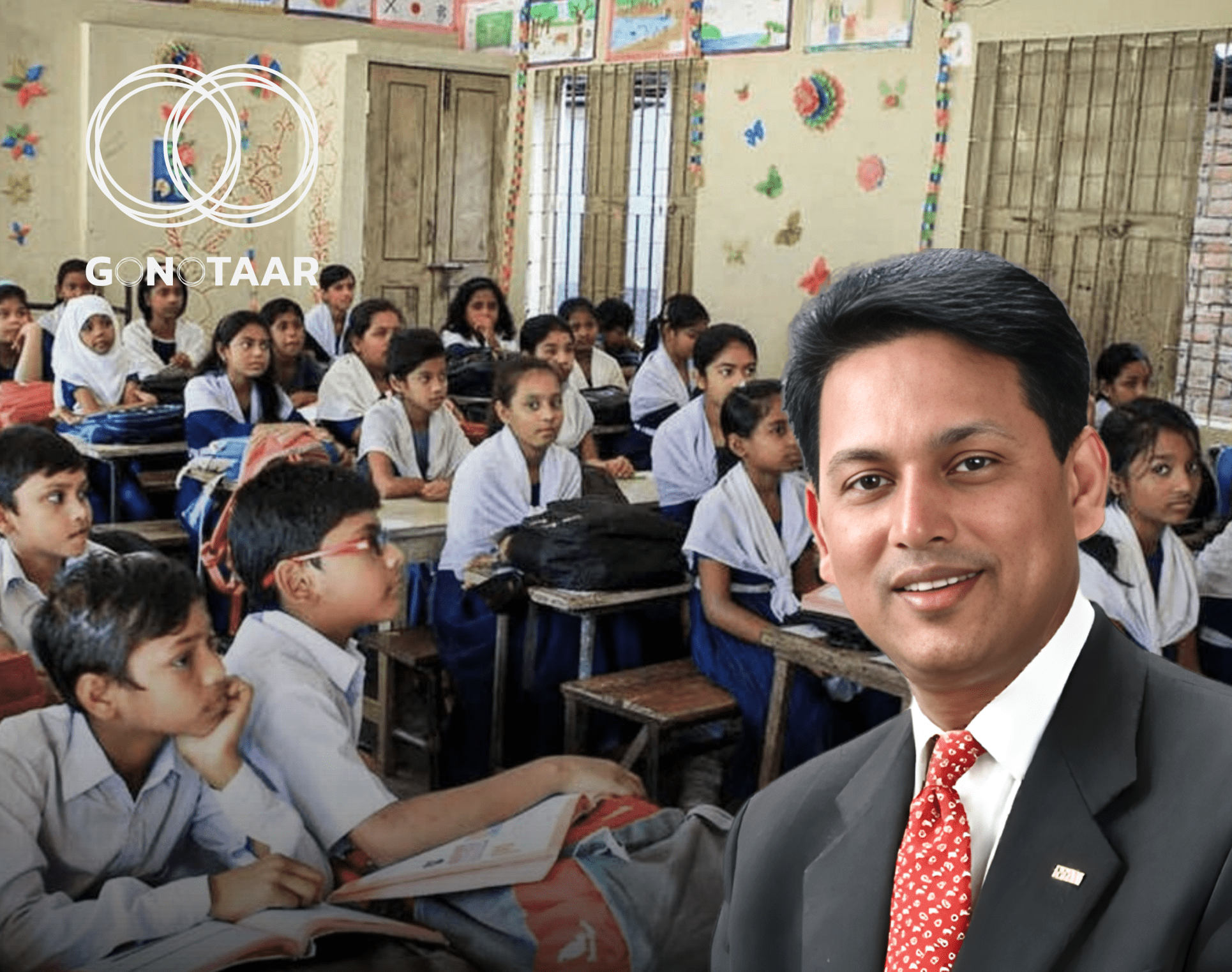
The primary scholarship exams, stalled last year due to legal complications, are set to return in the first week of April, ahead of the upcoming Eid-ul-Adha. This move marks the formal reintroduction of the traditional standalone scholarship format, which has been largely absent or inconsistent for 16 years since the original system was scrapped in 2009.
During a press conference at the Secretariat on Wednesday, Education Minister A N M Ehsanul Huq Milon announced the decision while releasing the results of the Junior Scholarship and Madrasa (Ebtedayee) exams. State Minister for Education Bobby Hajjaj was also present.
A Return to Tradition
Following the discontinuation of the traditional scholarship exam in 2009, the government shifted to awarding scholarships based on the Primary Education Completion (PEC) results. However, with the suspension of PEC during the pandemic and subsequent curriculum changes, the standalone scholarship exam has seen various hurdles. Minister A N M Ehsanul Huq Milon emphasized that this year’s exam reflects a return to an educational tradition that the government intends to preserve.
Quotas and Distribution
The Minister clarified that a uniform question paper will be used across the country to maintain a singular education standard. However, scholarship quotas will be divided as follows:
- Government Schools: 80% of the total scholarships.
- Private/Kindergarten Schools: 20% of the total scholarships.
Scholarship Breakdown
A total of 82,500 students will receive financial awards. The distribution is detailed below:
| Category | Total Recipients | Government Sector | Private Sector |
| Talent Pool (Medha) | 33,000 | 27,500 | 5,500 |
| General Scholarship | 49,500 | 41,250 | 8,250 |
Recipients of the Talent Pool scholarship will receive a monthly stipend of 300 BDT and a one-time grant of 225 BDT. General scholarship recipients will receive 225 BDT monthly alongside a one-time grant of 225 BDT.
Addressing Criticism
The decision has faced scrutiny from some educationists who argue that specialized exams might increase educational disparity and encourage “coaching culture.” Critics worry that teachers may focus solely on high-performing students, leaving others behind.
In response, A N M Ehsanul Huq Milon stated that while he respects the advice of experts, he is currently in favor of the traditional system. State Minister Bobby Hajjaj added that the government aims to expand this “incentive umbrella” to eventually include more students under its benefits.