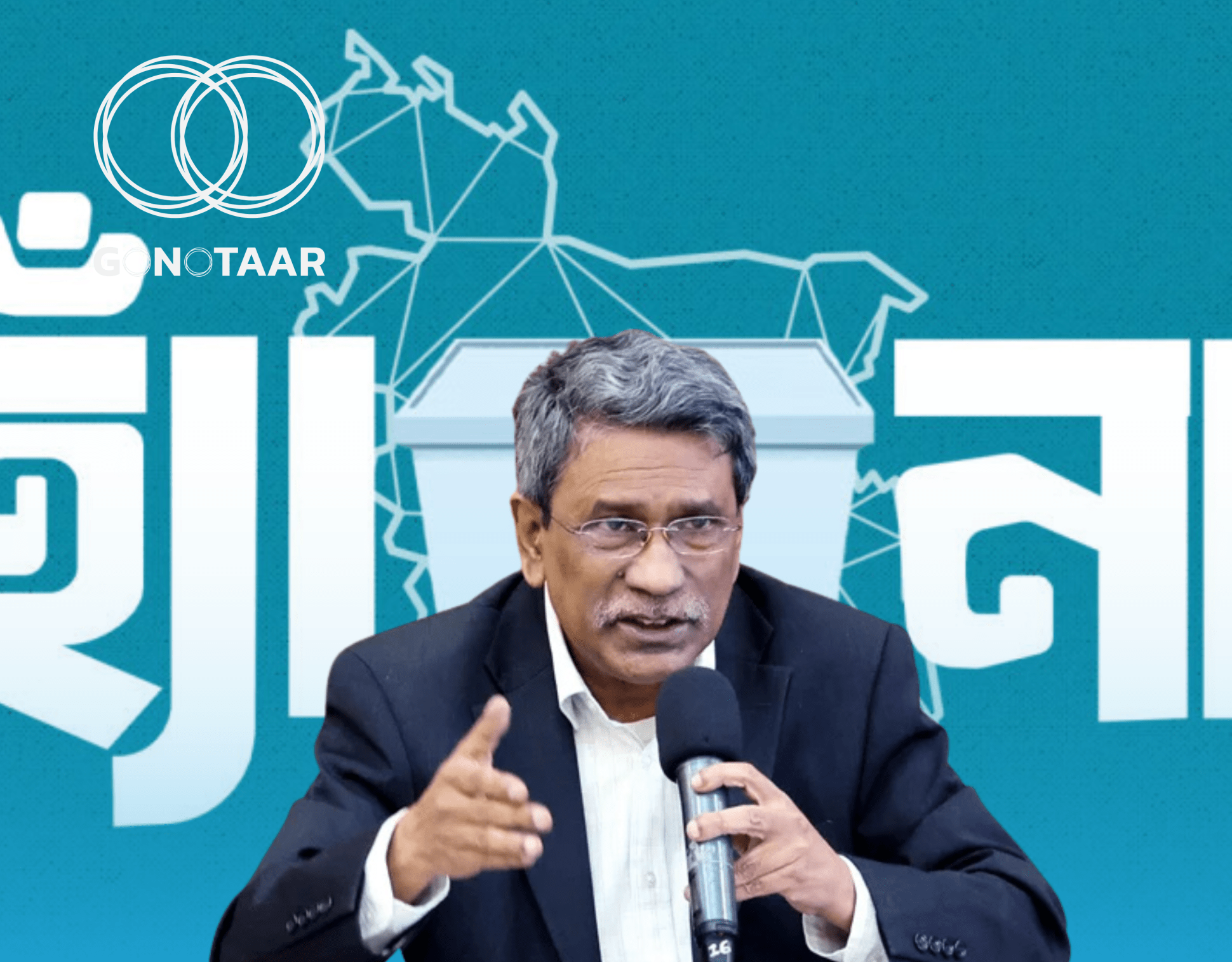
Professor Ali Riaz, Special Assistant to the Chief Adviser, stated on Thursday that the upcoming national referendum is designed to ensure that no future ruler of Bangladesh can ever turn into a fascist.
Speaking at a workshop titled “Upcoming Referendum and the Role of NGOs” held at the NGO Affairs Bureau conference room in the capital, Professor Ali Riaz emphasized that the existing “flawed constitutional and state structures” have historically provided leaders with the opportunity to become autocrats.
Closing the Path to Fascism
“The upcoming referendum is a safeguard,” Professor Ali Riaz said. “By securing a ‘Yes’ vote, we must close the path for those in power to become fascists. This is not just a vote; it is a collective decision on how the future Bangladesh will be governed.”
He further clarified that the referendum will be held concurrently with the general election (scheduled for February 12, 2026). Voters will receive two ballots at the polling stations:
- White Ballot: For electing people’s representatives.
- Colored Ballot: For the referendum.
Responsibility Born of Sacrifice
As the chief coordinator of the government’s referendum awareness campaign, Professor Ali Riaz reminded the audience of the heavy price paid during the July mass uprising.
“Those who sacrificed their lives and those who were victimized under the previous regime to establish democracy have entrusted us with this responsibility. It is our duty to create public opinion and ensure maximum participation,” he stated. He urged NGO representatives to leverage their trust at the grassroots level to educate the marginalized population about the significance of the vote.
Vision for a Reformed State
Monir Haidar, Special Assistant (Consensus) to the Chief Adviser, also addressed the workshop as a special speaker. He warned that if the desired reforms are not achieved through this referendum, the country risks sliding back into the state of affairs that existed before August 5.
“A ‘Yes’ vote will pave the way for an effective parliamentary system, a balance of power between state institutions, and decentralization of the judiciary,” Monir Haidar noted.
Key Participants
The workshop featured a presentation by Badiul Alam Majumdar, founder secretary of Citizens for Good Governance (Supro) and former member of the National Consensus Commission, titled “Referendum: What and Why?”
The session was moderated by Md. Daud Miah, Director General of the NGO Affairs Bureau. Representatives from approximately 450 local and international NGOs participated in the event, marking a significant step in the nationwide mobilization for the upcoming constitutional reform process.