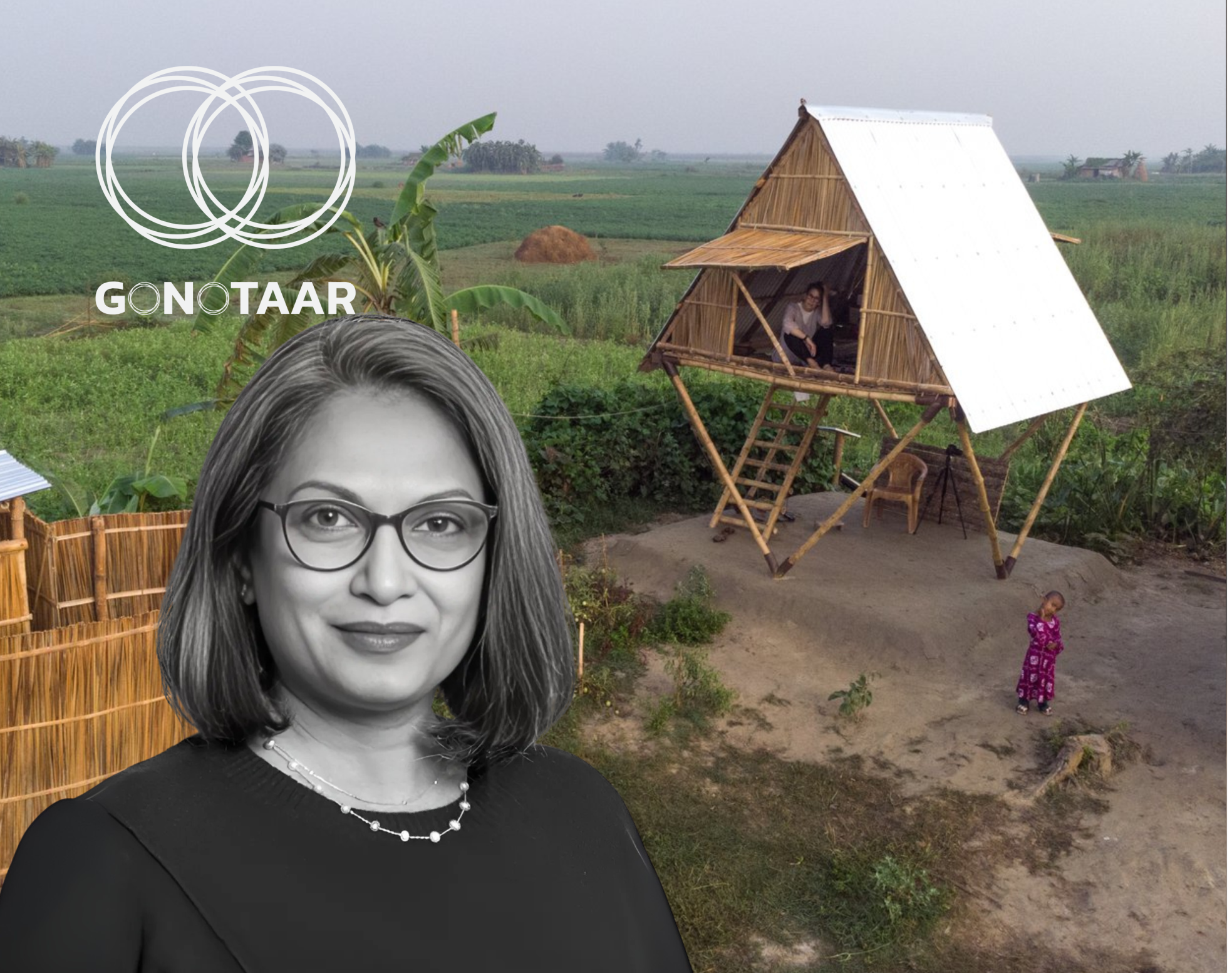
Renowned Bangladeshi architect Marina Tabassum has won her second Aga Khan Award for Architecture for her innovative project Khudi Bari, a replicable housing solution for displaced communities affected by climate change. The announcement came as part of the 16th cycle (2023–2025) of the prestigious award, which celebrates architecture that addresses social, cultural, and environmental challenges.
The independent Master Jury selected seven winners after conducting on-site reviews of shortlisted projects, emphasizing designs that foster pluralism, community resilience, social transformation, and climate-responsive innovation. The winners will share a $1 million award, among the largest prizes in global architecture.
Khudi Bari, implemented in various locations across Bangladesh, is constructed with bamboo and steel to provide durable, sustainable housing for communities displaced by environmental and geographical challenges. The jury highlighted the project’s ecological approach and its contribution to advancing bamboo as a versatile building material.
Marina Tabassum Architects (MTA), founded in 2005 by Tabassum in Dhaka, is internationally acclaimed for its socially responsive and environmentally sensitive designs.
The Aga Khan Award for Architecture, established in 1977 by His late Highness Prince Karim Aga Khan IV, recognizes projects that enhance the physical, social, economic, and cultural lives of communities with a significant Muslim presence.
The 16th cycle prize-giving ceremony will be held on September 15 at the Toktogul Satylganov Kyrgyz National Philharmonic in Bishkek, Kyrgyz Republic. The award also acknowledges municipalities, builders, artisans, and engineers who contribute significantly to the projects.
Other winners this year include:
- China: West Wusutu Village Community Centre, Hohhot – a cultural hub built from reclaimed bricks for multi-ethnic communities.
- Egypt: Revitalisation of Historic Esna – urban transformation through cultural, socioeconomic, and tourism-focused interventions.
- Iran: Majara Residence, Hormuz Island – sustainable, colorful accommodations reflecting the local landscape.
- Iran: Jahad Metro Plaza, Tehran – transformation of a dilapidated station into a pedestrian-friendly urban space.
- Pakistan: Vision Pakistan, Islamabad – a multistorey facility promoting vocational training for disadvantaged youth.
- Palestine: Wonder Cabinet, Bethlehem – multipurpose space supporting local artisans, design, and cultural innovation.
Prince Rahim Aga Khan V, Chair of the AKAA Steering Committee, said, “Inspiring younger generations to build with environmental care, knowledge and empathy is among the greatest aims of this Award. Architecture today must engage with the climate crisis, enhance education and nourish our shared humanity.”
Farrokh Derakhshani, Director of the Aga Khan Award for Architecture, added, “Architecture can – and must – be a catalyst for hope, shaping not only the spaces we inhabit but the futures we imagine.”
This recognition positions Marina Tabassum as a global leader in sustainable and socially responsible architecture, highlighting Bangladesh’s contribution to climate-conscious and community-centered design.