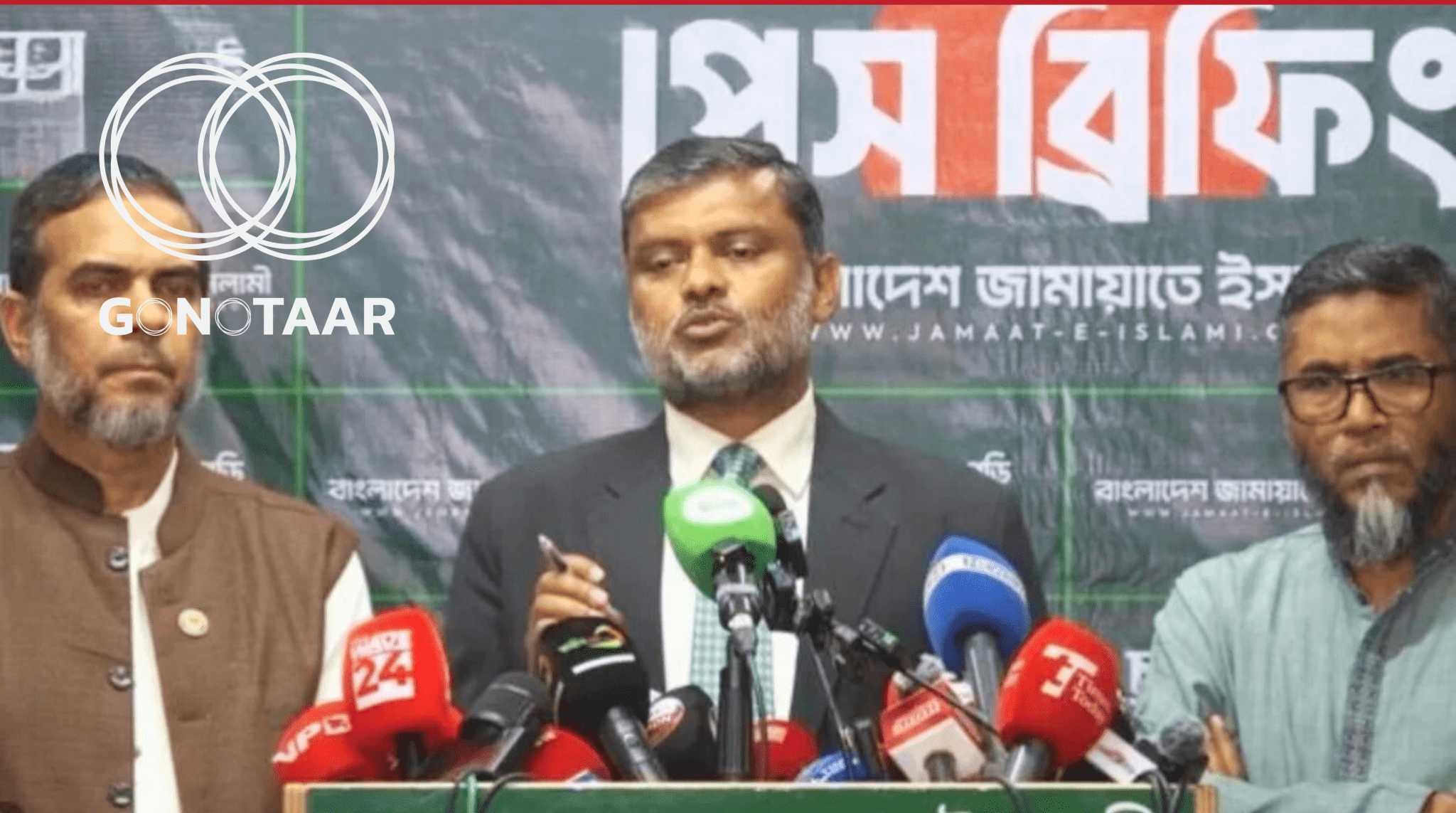
BNP Secretary General Mirza Fakhrul Islam Alamgir has publicly criticised Bangladesh Jamaat-e-Islami for boycotting the National Consensus Commission’s political dialogue held yesterday, claiming the Islamist party fears losing its political relevance after the upcoming national election.
Speaking at a BNP programme in Dhaka’s Sunbeams School premises on Tuesday, Fakhrul remarked, “Many are disappointed with the meeting’s outcome because the election puts their future at risk. Without an election, some parties hold more importance than they actually have.”
Although he did not name Jamaat directly at first, Fakhrul made clear references to the party, saying, “They are worried about how much influence they will have after the election. That’s why they did not attend the meeting.”
The comments came a day after Jamaat-e-Islami skipped a high-stakes consensus meeting, where parties were expected to solidify a collective stance on the path forward for Bangladesh’s next general election. According to media reports, Jamaat protested the meeting as a reaction to being excluded from key discussions—particularly a recent joint declaration issued from London by Chief Adviser Prof Muhammad Yunus and BNP Acting Chairman Tarique Rahman.
On 13 June, Yunus and Tarique met in London and agreed to hold the next election in February 2026, a week before the beginning of Ramadan. This meeting, Fakhrul said, represented a “rare and historic” moment in Bangladesh’s democratic journey.
“In April, there was uncertainty and division over the election schedule. But both Prof Yunus and Tarique Rahman showed maturity and agreed to compromise. This is statesmanship,” Fakhrul said.
Jamaat, however, appears dissatisfied with the process, particularly over what it claims was an exclusion from meaningful participation in shaping the outcome of the London meeting. The party informed the National Consensus Commission that it felt “ignored” and “marginalised.”
The BNP event where Fakhrul spoke also marked the launch of the Dhaka North BNP’s membership drive in the Turag area, a campaign aimed at revitalising grassroots organisational strength ahead of the February polls.
The absence of Jamaat—a long-time ally of the BNP in previous elections—has triggered questions about potential fractures within the broader anti-government opposition alliance. Political analysts warn that continued tensions between opposition factions could weaken the strength of any collective electoral push.
While BNP leadership has tried to project unity around the Yunus-Tarique agreement, Jamaat’s snub may be an early indication that not all allies are on board with the new roadmap.
.